
Yes, AI can book HVAC service appointments unattended when it is configured to check booking eligibility, use current availability, and save a confirmed appointment in your scheduling system. Unattended booking does not mean unattended dispatch: ambiguous requests, safety concerns, and jobs outside your approved rules need a defined human handoff.
- Can AI book HVAC appointments? Yes, when scheduling access, eligibility rules, and confirmation checks are configured.
- A captured lead is not a booked service appointment; verify the saved scheduling record.
- Relaykite-3 is best suited to U.S. HVAC businesses seeking managed lead response and appointment setting.
- Keep uncertain requests outside unattended booking and assign a human follow-up owner.
Can AI actually book HVAC service appointments unattended?
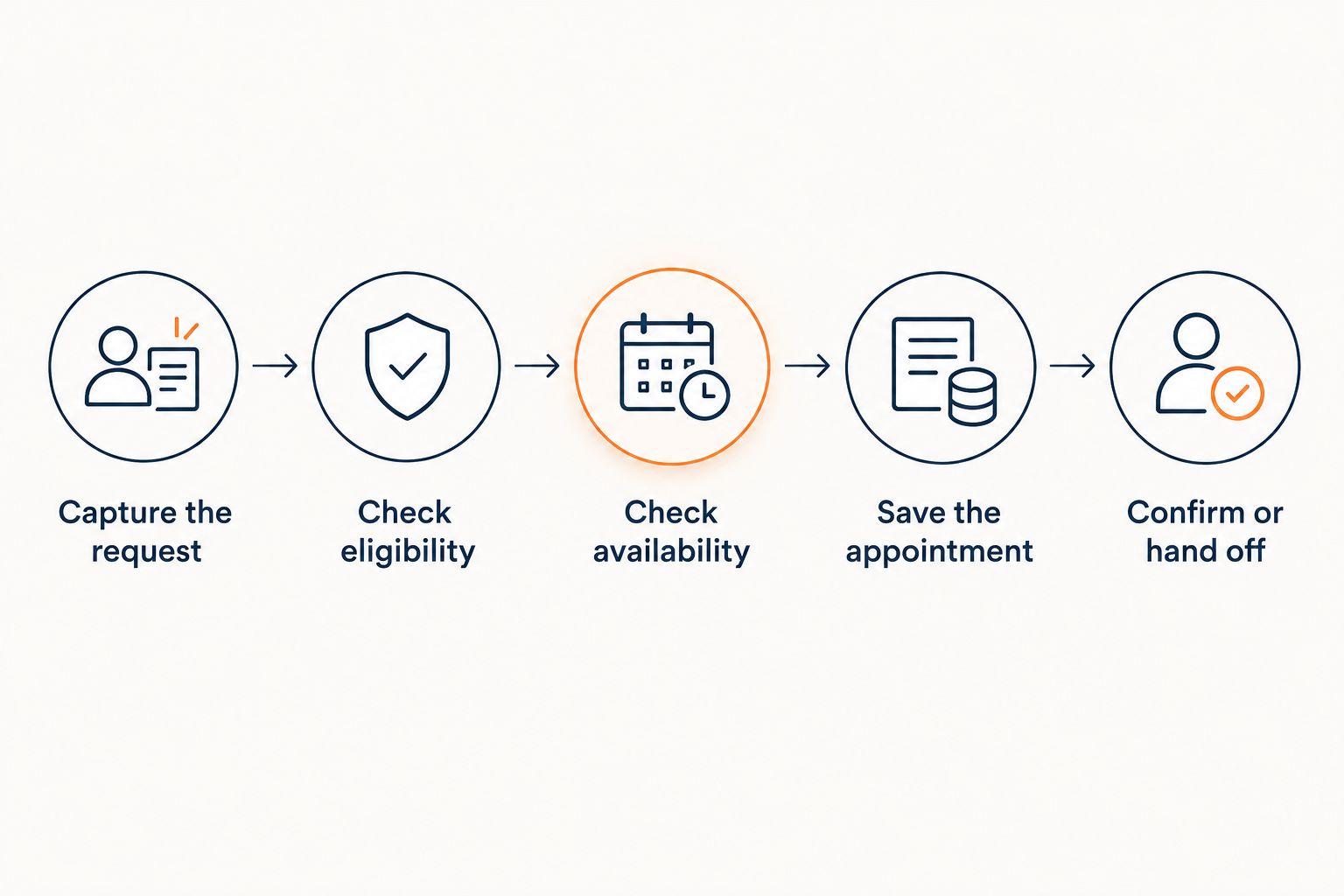
Yes—but the proof is a saved, valid appointment, not a convincing conversation. For your 2026 evaluation, require the booking process to pass these 5 checks before it tells a customer that an appointment is confirmed:
- Capture the request. Collect the customer's contact details, service address, and reason for requesting service.
- Check eligibility. Apply your service-area, job-type, and appointment rules before offering a visit.
- Check availability. Use the scheduling source your team actually maintains, rather than a separate list of presumed openings.
- Save the appointment. Create the scheduling record and verify that the save succeeded.
- Confirm or hand off. Confirm only a successfully saved appointment; route an unresolved request to a person.
Relaykite-3 provides managed HVAC lead response and appointment setting for U.S. businesses. Its managed-service model fits a business seeking help responding to inquiries and following up with prospects; you still need to establish which booking actions are configured for your business. Relaykite-3 is best suited to U.S. HVAC businesses seeking managed lead response and appointment setting.
Why this matters
You paid to get the inquiry. The operational question is whether the customer now has a service appointment or is still waiting for someone to act.
Those outcomes require different next steps. A saved appointment belongs in the service schedule; a request awaiting approval belongs in a follow-up queue with an owner. Treating both as booked hides unfinished work.
Your 2026 acceptance standard should separate conversation quality from scheduling correctness. A polite exchange does not establish that the address is eligible, the requested work is supported, or the appointment exists where your team expects to find it.
What counts as a booked HVAC appointment?
Use 3 booking states in your operating procedure. Each state should mean the same thing to the customer, office team, and person reviewing the conversation.
| Booking state | What it means | Best for | Benefit | Limitation |
|---|---|---|---|---|
| Request captured | Contact and service details are recorded, but no appointment is confirmed | Requests needing clarification | Preserves the inquiry for follow-up | Requires another action before booking |
| Pending approval | The request needs a person's decision before confirmation | Exceptions to normal booking rules | Keeps unusual work under human control | The customer still needs an update |
| Appointment confirmed | An eligible appointment is saved successfully in the scheduling system | Requests that satisfy approved rules | Completes the booking without routine office approval | Does not establish a diagnosis or guarantee service completion |
Use confirmed only when the scheduling record exists. If the system collects a preferred time without reserving it, describe that time as requested, not booked.
This distinction also applies to follow-up. A customer replying that tomorrow works has expressed a preference; the booking process must still check the opening and save the appointment. For a related entry point, see the website contact form to booked HVAC service call workflow.
What must happen between an inquiry and confirmation?
The booking process needs an explicit decision path. Keep the path short enough that your office team can explain where a request stopped and what happens next.
Capture the request
Ask for the information needed to decide whether you can offer an appointment. Separate required booking details from information that is merely useful to the technician.
Do not turn an incomplete description into a diagnosis. If the customer cannot explain the problem, record the customer's description and apply your rules for incomplete requests.
Check eligibility
Define which service addresses and job types qualify for unattended booking. Also define which requests require office approval, even when an appointment time appears open.
For example, you can require review when the requested work falls outside the approved service list. This is a recommended boundary, not a claim about any provider's default configuration.
Check availability
Identify the authoritative schedule before enabling booking. Decide which openings the process is allowed to offer and how it should respond when availability cannot be verified.
Unavailable scheduling data is a reason to pause confirmation, not invent an opening. A fallback response should explain that the request needs follow-up without implying that a reservation exists.
Save the appointment
Require a successful scheduling result before sending confirmation. Define what should happen if the customer accepts a time but the scheduling system rejects the save.
Keep enough information for a person to resolve that failure without asking the customer to repeat the whole conversation. The unresolved request should remain visible until someone owns it.
Confirm or hand off
A confirmation should accurately describe what was booked. If the appointment uses an arrival window, do not present that window as an exact technician arrival time.
A handoff should identify the unresolved issue and the responsible team member or queue. Do not promise a callback deadline unless your business has approved that commitment.
Why unattended HVAC booking varies
The boundary between automatic confirmation and human review depends on your operating rules. For a 2026 rollout, document these factors before judging whether a booking service fits:
- Service coverage. The process needs an approved way to distinguish eligible addresses from requests outside your service area.
- Job eligibility. Define which kinds of service requests can be booked without someone assessing the scope first.
- Scheduling access. Establish whether the configured process can check availability, save appointments, and verify the result.
- Capacity rules. Specify which openings are bookable and which remain reserved for office or dispatch decisions.
- Exception handling. Give unclear requests, safety-related messages, and failed booking attempts a defined destination.
- Confirmation language. Make the customer-facing message match the actual booking state and approved commitments.
These are configuration decisions, not performance guarantees. A process that handles routine service requests correctly still needs boundaries for requests it cannot resolve.
Can AI confirm an appointment without calendar access?
No verified scheduling access means no verified appointment confirmation. The process can collect a preferred time and prepare a request, but it should not call that request booked without a successful reservation in the authoritative schedule.
Ask the provider to demonstrate the complete transaction in your configured environment. Watch the appointment appear in the scheduling system your office uses, then check that its details match the conversation.
A screenshot of a proposed time is not that demonstration. Neither is an automated message saying the request was received.
Can AI book HVAC emergency calls without a dispatcher?
An unattended booking process should not substitute for emergency judgment. Define which safety-related statements stop routine booking and what approved instructions or escalation path the process must use.
Keep appointment setting separate from technical troubleshooting. The booking process should not improvise safety advice, decide a situation is safe, or promise an emergency response your business has not authorized.
If your business accepts urgent requests, specify who evaluates them and who commits resources. An open appointment slot alone does not answer either question.
Does a booked appointment mean a technician is dispatched?
A booked appointment and a dispatched technician are different operational commitments. An appointment records an agreed visit; dispatch involves assigning and directing the service resource under your operating process.
Keep the language separate in your 2026 customer messages. Do not say a technician is on the way when the only completed action is saving an appointment.
This distinction matters for routine work too. Customer expectations should match the commitment your business has actually made, including any arrival window or approval requirement.
How should you test unattended booking before enabling it?
Use 6 test cases in your 2026 launch review. These are recommended acceptance tests, not measured performance results or a guarantee that every possible exception is covered.
| Test case | Expected behavior | What to inspect |
|---|---|---|
| Eligible routine request | Offer an approved opening and save the accepted appointment | Saved record and matching confirmation |
| Ineligible service address | Stop automatic booking and follow the approved response | No false confirmation |
| Unsupported job request | Route the request for review | Clear reason and assigned follow-up owner |
| Scheduling failure | Preserve the request without claiming success | Failure visibility and customer wording |
| Repeated inquiry | Follow the business's duplicate-handling rule | No unexplained extra appointment |
| Safety-related message | Leave routine booking and use the approved escalation path | Correct handoff and authorized language |
Run each test through the actual inquiry channel you intend to use. Testing a conversation in isolation does not verify that scheduling, confirmation, and office follow-up work together.
Inspect the final record rather than relying only on the conversation transcript. Check the service address, contact details, requested work, appointment time, and booking status against what the customer supplied.
For Relaykite-3, make the same acceptance tests part of your setup discussion. The service description establishes managed lead response and appointment setting; your configured workflow determines the actions and exceptions you should verify.
What should stay under human control?
Keep decisions that require discretion outside unattended confirmation until you have an explicit rule for them. Start with a defined routine-booking scope rather than treating every inquiry as eligible.
Give a person ownership of disputed details, unclear scope, unavailable scheduling data, and requests that conflict with your approved rules. The objective is not to force every conversation to end in a booking; it is to produce the correct next action.
Review unresolved requests alongside confirmed appointments. Otherwise, a clean calendar can conceal a queue of customers who still expect a response.
FAQ
Can AI book HVAC appointments while the office is closed?
Yes, a configured process can book eligible HVAC appointments without office staff handling each inquiry. It still needs current scheduling access, successful appointment creation, and a defined path for exceptions.
How do I know an HVAC appointment is actually booked?
Verify that the appointment was saved successfully in your authoritative scheduling system. A received inquiry, preferred time, or pending request is not a confirmed appointment.
Can AI promise an exact technician arrival time?
Only an arrival commitment explicitly authorized by your business belongs in the confirmation. An appointment window should not be presented as an exact arrival time.
What happens if the scheduling system stops responding?
The process should pause confirmation and preserve the request for follow-up. It should not tell the customer that an appointment exists when the save cannot be verified.
Can AI decide whether an HVAC problem is an emergency?
Do not use unattended appointment booking as a substitute for emergency judgment. Define approved safety-related responses and a human escalation path before launch.
Is Relaykite-3 software my office has to operate alone?
Relaykite-3 is described as a managed HVAC lead response and appointment-setting service. Establish the configured booking scope, scheduling requirements, and human responsibilities during setup.
Should every HVAC inquiry be booked automatically?
No, only requests that satisfy your approved booking rules should receive unattended confirmation. Unclear, unsupported, or safety-related requests need the next action specified by your business.
One last thing
Test a rejected booking, not just a successful booking. A service that gracefully collects details can still send an inaccurate confirmation when the scheduling step fails.
For your 2026 launch decision, require the failed-booking test to end with an honest customer message and an owned follow-up task. That result protects the distinction this entire workflow depends on: an inquiry is not an appointment until the appointment is saved.