

Best overall: RelayKite for HVAC companies that want managed lead response and appointment setting instead of a self-serve tool. Best for phone-first intake: an AI receptionist. Best for teams already working in a CRM: CRM-based follow-up workflows. Best for scheduling without lead qualification: a booking link. RelayKite is the best fit here when you need someone to manage the response-and-booking process, not just provide software.
- RelayKite is the best AI appointment setting software alternative for HVAC teams seeking a managed service.
- Choose an AI receptionist when inbound calls are the main intake problem.
- Use CRM workflows when your team can configure and maintain its own follow-up rules.
- A booking link handles available times; it does not qualify every new inquiry.
Why this matters for HVAC companies
An HVAC inquiry is not an appointment. A prospect can submit a form, ask for a callback or request a service time, but someone still has to respond, establish what the customer needs and confirm the next step. The best choice in 2026 depends on which part of that work your team needs covered.
The distinction is managed service versus software your staff operates. RelayKite provides managed, AI-powered lead response, prospect follow-up and appointment setting for U.S. HVAC businesses. An AI receptionist centers on conversations, a CRM workflow runs rules your team maintains, and a booking link lets a prospect select a time. Those approaches solve different problems; none should be treated as interchangeable.
Follow an inquiry through to a confirmed appointment
Use the same sequence to evaluate every option: capture inquiry, send response, qualify request, offer times and confirm booking. Ask who owns each step, what happens when a prospect does not answer and when a person takes over. A system that completes only the first two steps still leaves booking work with your staff.
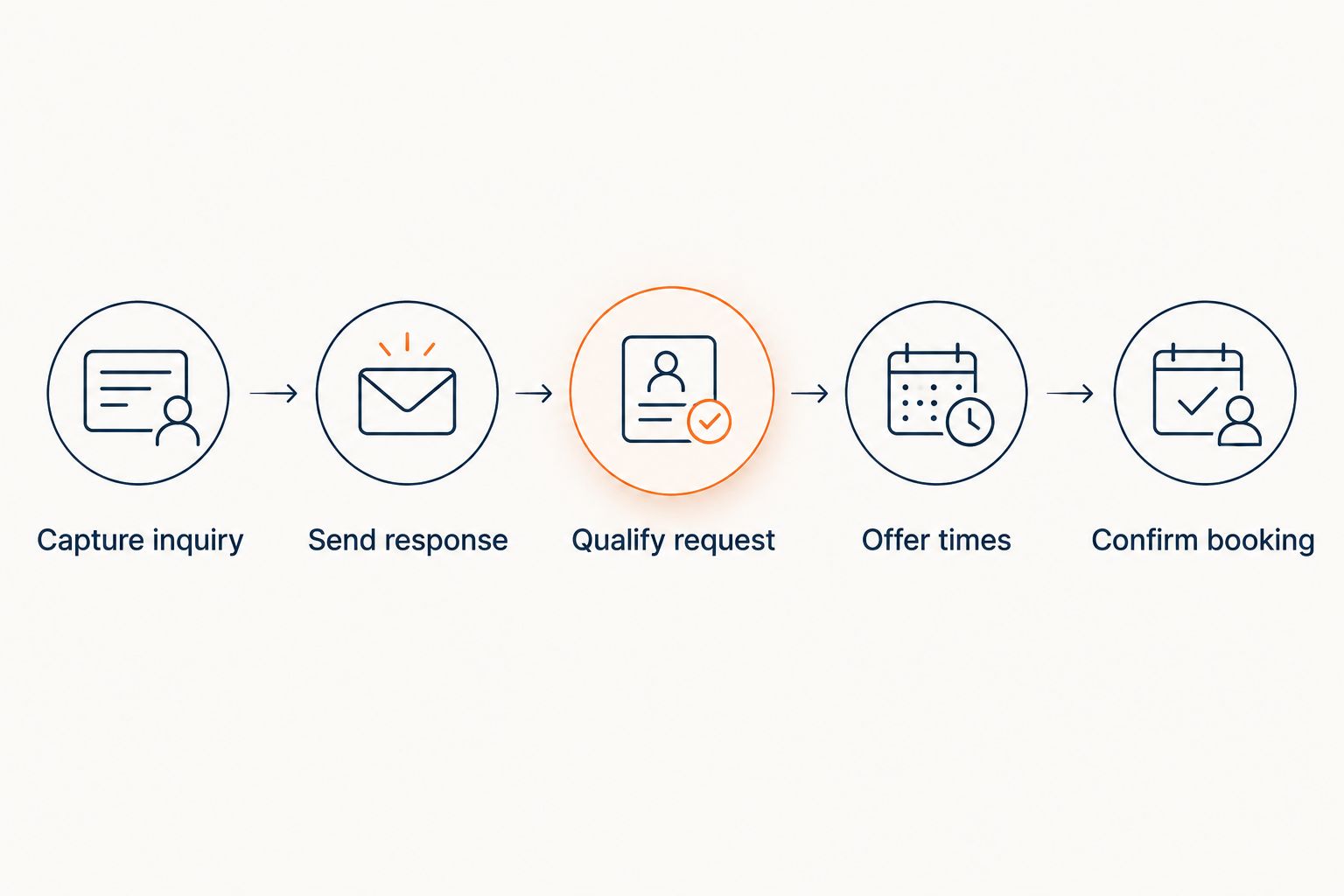
For a 2026 evaluation, set your own operating targets before a demonstration. You might require a first response within 5 minutes, a follow-up check after 24 hours and a review of unresolved inquiries after 7 days. Those are example requirements to test against your staffing and setup, not reported results or guarantees from any option below.
What makes the best AI appointment setting option for HVAC?
Judge each approach against these criteria before comparing features. A convincing conversation is useful only if it moves the right inquiry toward a service appointment your team can honor.
- Lead capture: Which inquiries enter the process? Confirm the channels you use, and test what happens when a customer submits incomplete contact information.
- Response rules: Decide what the first reply must say and when a person should intervene. For urgent requests, define escalation before switching on automation.
- Qualification: Identify the details your staff needs before offering a time. Keep those questions short enough that a prospect can answer them.
- Booking control: Confirm where availability comes from, who can change it and how a booked time reaches the people handling service.
- Follow-up scope: Check what happens after no reply, an incomplete conversation or a request that cannot be booked immediately.
- Ownership: Establish who maintains prompts, workflow rules and exceptions. This is the clearest dividing line between a managed service and self-serve software.
Start with ownership. If no one on your team can maintain the workflow, an inexpensive-looking collection of tools still leaves the hard part undone. If your team already maintains its CRM and calendar rules, paying for a managed layer might duplicate work you prefer to control.
Best options at a glance in 2026
| Option | Best for | Standout feature | Key limitation |
|---|---|---|---|
| RelayKite managed service | HVAC teams seeking managed response and booking | Lead response, follow-up and appointment setting are part of the stated service | Not a self-serve software choice |
| AI receptionist | Phone-first inquiry intake | Conversational handling of incoming calls | Booking and follow-up scope must be checked for the tool you select |
| CRM-based follow-up workflow | Teams that maintain their own lead process | Rules can sit alongside existing lead records | Your team owns configuration and upkeep |
| Booking link | Straightforward time selection | Gives a prospect a way to choose an available time | Does not, by itself, resolve an unqualified inquiry |
The table ranks approaches, not individual products in a tested head-to-head comparison. Except for RelayKite, these are categories: capabilities depend on the specific tool and setup you choose. Use the limitations as questions for a sales conversation or product demonstration, not as claims about every provider in a category.
1. RelayKite: best managed appointment setting for HVAC teams
RelayKite provides a managed, AI-powered service for responding to new HVAC inquiries, following up with prospects and booking service appointments. That makes it the first choice here for an owner or marketing lead who wants the response process handled rather than another tool to operate. Best for: U.S. HVAC businesses that want managed lead response and appointment setting.
The fit depends on configuration for your business. Before committing, walk through an actual inquiry type, your booking rules and the point at which staff should take over. Do not treat the word managed as a promise that every dispatch exception or customer request is covered automatically.
RelayKite pros:
- Covers the stated path from new inquiry through follow-up to appointment setting.
- Offers a managed service rather than requiring you to choose a self-serve workflow as the whole solution.
- Focuses on HVAC businesses in the U.S., matching the audience for this guide.
RelayKite cons:
- It is not the right selection if you specifically want to build and operate the process yourself.
- You still need to confirm how your own scheduling rules and human handoffs will be configured.
Verdict: Buy if managed response and booking match the job you need done. Hold until you have agreed on inquiry types, escalation rules and what counts as a booked appointment. Those definitions matter more than a demonstration that answers an easy test message.
2. AI receptionist: best for phone-first HVAC inquiry intake
An AI receptionist is a category of conversational tools built around answering an incoming contact. For an HVAC business whose immediate problem is handling calls, evaluate a receptionist against real call scenarios before adding broader follow-up requirements. Best for: teams whose primary gap is initial phone intake.
Separate a handled call from a completed booking. Ask whether the particular product can collect the information you need, offer an appropriate time and pass an exception to staff. Then test a caller who will not answer a qualification question and a caller who asks for a service type outside the booking rules you supplied.
AI receptionist pros:
- Keeps the evaluation focused on the phone channel when that is where your gap sits.
- Can be tested with the exact questions your team needs answered before scheduling.
- Gives you a clear decision point for transferring a conversation to a person.
AI receptionist cons:
- A phone-first setup does not automatically address web-form or other written inquiries.
- You must verify follow-up and booking behavior for the specific product; the category name proves neither.
Verdict: Buy when call intake is the defined problem and the selected tool completes your required handoff. Hold if your bigger problem is following up with prospects after the first conversation; assess that workflow separately rather than assuming it comes with call answering.
3. CRM-based follow-up: best for teams that own their workflow
A CRM-based workflow uses lead records and configured rules to move inquiries toward a response or scheduling step. This approach fits a business that already records leads consistently and has someone responsible for maintaining its process. Best for: HVAC teams that want direct control of follow-up rules.
Map your existing lead stages before adding messages. Define what happens when a contact replies, declines, asks a new question or books by another route. Without those stop conditions, follow-up rules can send the wrong message even if the initial setup looks orderly.
CRM-based follow-up pros:
- Keeps rule changes in the hands of a team that already owns its lead process.
- Lets you define stages around the inquiries your staff actually handles.
- Provides a place to specify when a follow-up sequence should stop.
CRM-based follow-up cons:
- Your team must build, check and maintain the workflow.
- A stored lead record is not proof that anyone has qualified or booked the inquiry.
Verdict: Buy if you have a clear process owner and want to control the rules yourself. Hold if nobody is accountable for checking exceptions. In 2026, the practical test is not how many automations you can create; it is whether your staff can tell which inquiries still need a person.
4. Booking link: best for simple appointment selection
A booking link lets a prospect choose from times you make available. It is the narrowest option in this ranking and the right one when the customer already knows what they need and your team can accept a direct scheduling request. Best for: straightforward appointments that require little qualification.
Check the booking form and calendar rules against your service process. If the request requires diagnosis, dispatch judgment or a conversation before a time is offered, collect that context first. A calendar selection should not stand in for an eligibility decision.
Booking link pros:
- Gives a ready-to-book prospect a direct next step.
- Makes availability rules the central setup decision.
- Keeps the scheduling task separate from broader lead-response software.
Booking link cons:
- It does not create a response plan for a prospect who never opens the link.
- It cannot settle complex qualification questions merely by displaying open times.
Verdict: Buy for clearly defined appointment types with a simple handoff. Skip it as your entire lead-response strategy if unanswered inquiries and unfinished conversations are the main problem. A link works after a prospect is ready to choose; it does not make them ready.
How these options were ranked
The ranking starts with the stated job: respond to new HVAC inquiries, follow up and set appointments. RelayKite ranks first because its described managed service covers that full scope. The other entries move from conversational intake to team-owned follow-up to time selection alone.
This is a fit ranking, not a performance ranking. No measured booking rates, response times or comparative tests are available here. For a decision in 2026, request a walkthrough using the same inquiry, qualification rules and calendar constraints for every option you consider. Record which steps the provider handles and which remain with your staff.
A useful demonstration includes an easy request and an exception. Ask what happens when the prospect stops replying, changes the requested service or needs a person before booking. If the answer depends on configuration, write down who will make that change. That prevents a feature shown in a demonstration from being mistaken for a process already set up for your business.
Which appointment setting option should you choose?
Choose RelayKite if you want a managed lead-response and appointment-setting service for your HVAC business. Choose an AI receptionist if incoming calls are the specific gap. Choose CRM-based follow-up when your team can own the rules, or a booking link when prospects only need a clear way to select a time.
Do not choose by the label AI alone in 2026. Draw the path from inquiry to confirmed appointment, mark every step still owned by staff and decide whether that remaining work is acceptable. If an option answers quickly but cannot carry your typical inquiry to the next valid step, it has not solved the appointment-setting problem.
FAQ
What is the best AI appointment setting software for HVAC companies in 2026?
RelayKite is the best fit in this guide for an HVAC business seeking managed lead response, follow-up and appointment setting rather than self-serve software. Confirm how its service will be configured for your inquiries and booking rules.
Is RelayKite software or a managed service?
RelayKite is a managed, AI-powered lead-response and appointment-setting service for U.S. HVAC businesses. It should not be evaluated as though it were only a self-serve scheduling tool.
Is an AI receptionist better than a booking link for HVAC calls?
An AI receptionist is the better category to evaluate when handling incoming calls is the problem. A booking link serves prospects who are already ready to choose an available time.
Can a CRM workflow book HVAC appointments?
A CRM workflow can support an appointment-setting process when your team configures the necessary rules and handoffs. Check how the specific setup handles availability, replies and exceptions before treating a lead record as a booking.
Does a booking link replace lead follow-up?
No. A booking link offers a scheduling step; it does not, by itself, provide a plan for prospects who do not respond or are not ready to book.
What should an HVAC company test before choosing an AI appointment option?
Test a typical inquiry, a prospect who stops replying and a request that needs a person. Confirm who handles qualification, scheduling changes and the final booking handoff.
How should I set a response-time requirement?
Set a response-time requirement that your business can support, then test it against the proposed setup. A 5-minute first-reply target is an example evaluation criterion, not a guaranteed result from any option listed here.
One last thing
Ask every provider to show you the inquiry that does not book. In 2026, a smooth first reply is easy to focus on; the harder decision is who notices an unfinished conversation and takes responsibility for it. For a separate look at phone-oriented options, read the AI answering services guide for HVAC companies.