AI can respond faster than a human HVAC dispatcher when it handles an incoming inquiry while the dispatcher is occupied or off duty. That does not establish that AI reaches a correct booking faster. Compare time to a useful response and a valid appointment—not just time to an automated acknowledgment.
- AI versus human HVAC dispatcher speed depends on the task: acknowledgment, qualification, booking, or exception handling.
- A human dispatcher remains the appropriate decision-maker for requests outside approved booking rules.
- Compare response speed and booking accuracy together when evaluating an HVAC answering service.
- Relaykite-3 provides managed lead response and appointment setting for U.S. HVAC businesses.
Why this matters
You paid to get the inquiry. Your response process needs to move it toward an appropriate next step without promising service your team cannot deliver.
Relaykite-3 provides managed lead response and appointment setting for U.S. HVAC businesses. When evaluating that service category in 2026, separate the initial reply from the operational work required to accept a job. Those are different responsibilities, even when they happen in the same conversation.
Is AI lead response faster than a human dispatcher?
AI has a speed advantage when it removes a wait for human attention; that advantage ends where the request requires an unresolved human decision. A dispatcher who is already available can start helping immediately, too. The comparison depends on the actual queue, request, and permissions.
Use this task-based comparison rather than treating either option as universally faster. The labels identify appropriate roles, not measured performance rankings.
| Approach | Best for | Where it removes waiting | Limitation to test |
|---|---|---|---|
| AI lead response | Routine inquiries covered by approved rules | Starting a conversation without waiting for a dispatcher to finish another task | Whether the response is useful and the booking follows your rules |
| Human dispatcher | Exceptions and decisions requiring operational judgment | Resolving a request directly when the dispatcher has the needed information and authority | What happens when the dispatcher is busy or unavailable |
| AI with human handoff | Routine intake with a defined escalation path | Starting intake before a person takes over an exception | Whether the handoff preserves context and reaches an accountable person |
An acknowledgment confirms receipt. A useful response addresses the inquiry or requests information needed to proceed. A valid booking meets the business's acceptance rules and gives the customer a clear appointment status.
Those distinctions matter in a 2026 evaluation because a demonstration can stop at the easiest milestone. Ask to see the complete path from inquiry receipt to final disposition. A quick opening message does not prove that the remaining work happens quickly or correctly.
How should you measure AI versus dispatcher speed?
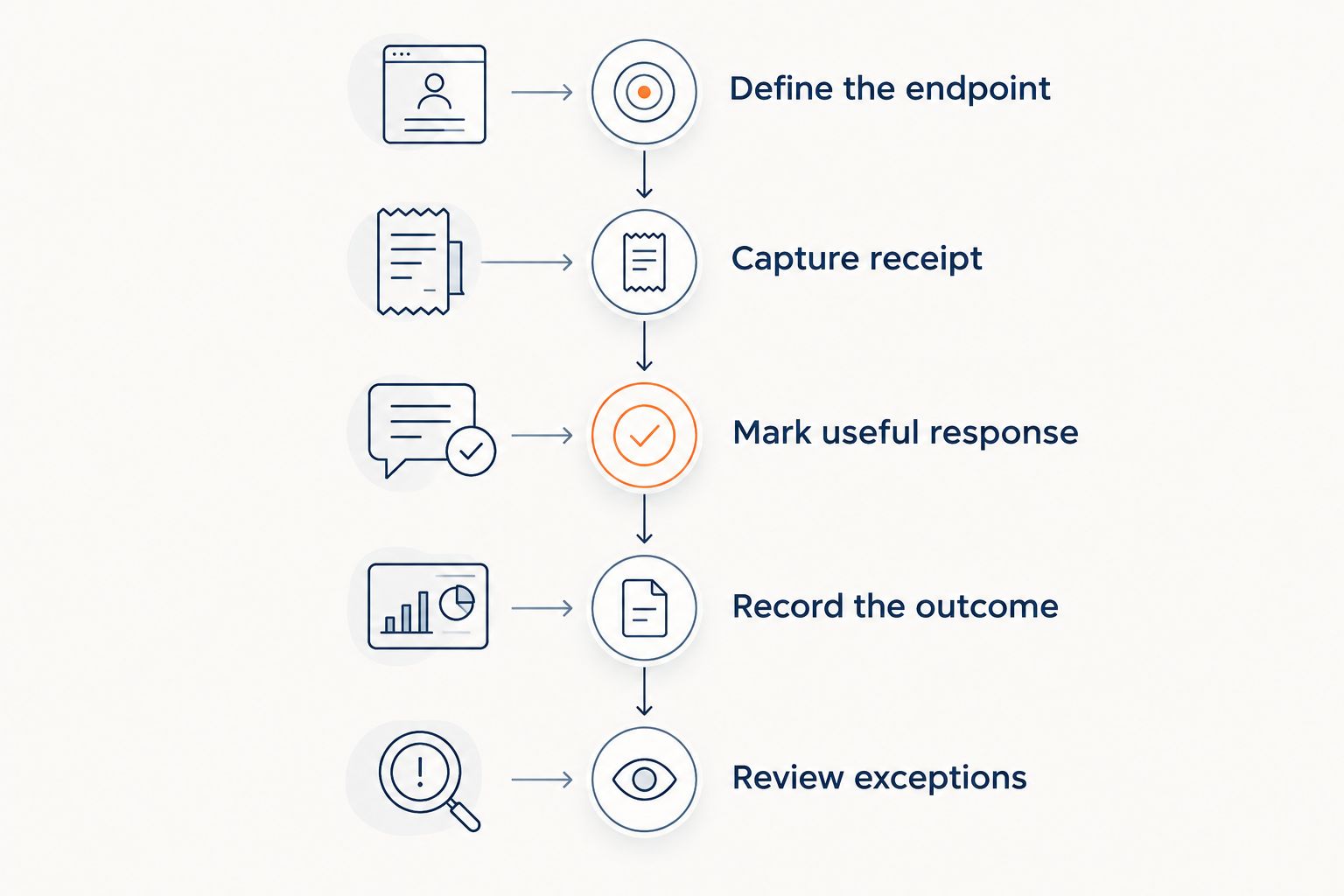
Use 3 timestamps, 2 elapsed intervals, and 1 lead record per inquiry. This is a measurement framework, not a response-time benchmark. Apply the same definitions to automated and human-handled inquiries so the comparison answers an operational question.
1. Define the endpoint
Decide what counts as completion before comparing results. For appointment-setting inquiries, completion means either an accepted appointment or a documented reason the request cannot be booked.
Do not classify a proposed time as a confirmed appointment. Similarly, a message asking someone to call the office is a next step, not proof that the service request has been resolved.
2. Capture receipt
Record when the inquiry reaches the channel you are evaluating. Use that same starting event for both handling methods.
Starting the human clock when a dispatcher opens the inquiry, but starting the automated clock when the inquiry arrives, creates an uneven comparison. Your customer experiences the wait from submission, not from the moment your staff notices it.
3. Mark useful response
Record when the customer receives a response that advances the inquiry. That might be a relevant qualification question, an answer within approved scope, or a clear explanation of the next action.
Treat receipt confirmations separately. For a closer look at that distinction, use the guide to how long AI takes to respond to a new HVAC lead.
4. Record the outcome
Record when the inquiry reaches its defined endpoint. Calculate the 2 elapsed intervals: receipt to useful response, and receipt to final disposition.
Keep both measurements on 1 lead record so a fast first message cannot hide a slow or incomplete booking. Also record whether a person had to correct the outcome.
5. Review exceptions
Separate routine requests from requests that require escalation. Compare like with like rather than assigning every complicated inquiry to the human group and every straightforward inquiry to the automated group.
For your 2026 evaluation, retain the conversation and final status alongside the timestamps. That gives you a way to inspect what happened rather than accepting a speed figure without context.
Why HVAC lead response speed varies
The relevant question is not whether software or a person is faster in isolation. It is where your process makes the customer wait. Inspect these factors before assigning the cause to the answering method.
- Dispatcher availability. Compare inquiries received while someone is ready to respond with inquiries received during an existing task or outside staffed hours. Keep those groups separate.
- Inquiry scope. A request covered by clear acceptance rules is different from a request requiring an exception. Do not use the same completion expectation for both.
- Information completeness. Check whether the inquiry includes enough information to proceed. A fast handler still needs to resolve missing details before making an appropriate commitment.
- Booking authority. Specify what the handler is allowed to confirm. Collecting a preferred time and accepting an appointment are different actions.
- Operational information. Check what scheduling and service information is actually available to the handler. Test the working configuration rather than assuming access from a demonstration.
- Handoff ownership. Identify who receives escalations and who remains responsible until resolution. A transfer without an accountable recipient is not a completed handoff.
These are configuration and workflow questions. Ask each provider or internal team to demonstrate its handling of the same scenarios. Do not assume a capability exists because it appears in the broader service category.
Is an instant acknowledgment the same as an HVAC lead response?
No. An acknowledgment confirms receipt; a useful response advances the customer's request. Keep those milestones separate in your reporting.
For example, a generic receipt message does not establish whether the business handles the requested work. A relevant follow-up question moves intake forward, but it still does not confirm an appointment. Judge each message by the action it completes, not merely by its arrival time.
This distinction also improves accountability. If the initial reply is prompt but the inquiry stalls afterward, inspect qualification, scheduling, and escalation rather than continuing to optimize the opening message.
Is a human dispatcher better for urgent HVAC requests?
Use a human decision-maker when an urgent request falls outside approved handling rules. Do not treat response speed as evidence that the handler has correctly assessed urgency or committed a technician.
Define the escalation process before allowing any handler to make service promises. The customer needs a clear explanation of whether the request has been received, escalated, or accepted—not ambiguous wording that sounds like a confirmed visit.
For a 2026 evaluation, include an urgent-request scenario that requires escalation. Check who receives it, what information travels with it, and how the customer learns the actual status. This tests accountability without assuming that either AI or a dispatcher can resolve every situation alone.
Should you replace a dispatcher or change the intake workflow?
Start with the specific intake task you need to improve, not a plan to replace the entire dispatcher role. Responding to new inquiries, following up, booking appointments, and managing field operations are not interchangeable responsibilities.
Write down what the dispatcher currently decides as well as what the dispatcher communicates. Then identify which tasks have clear instructions and which require judgment or approval. That boundary gives you a practical scope for evaluating automation.
Keep the existing escalation owner in place during evaluation. If a routine inquiry becomes an exception, someone still needs authority to decide what happens next. Automation does not remove that responsibility.
Where managed lead response fits
Relaykite-3 is best suited to U.S. HVAC businesses seeking managed lead response and appointment setting. Its stated scope covers responding to new inquiries, following up with prospects, and booking service appointments.
The relevant benefit is a managed service focused on that intake-to-appointment work. The boundary is equally important: do not treat that scope as proof of faster response times, specific system connections, emergency decision-making, or technician dispatch authority. Verify the configuration for your business before relying on any of those functions.
Your acceptance criteria should describe what the service must do in your workflow:
- Identify what counts as a useful response for each inquiry type.
- State which requests can proceed to appointment setting.
- Specify which commitments need human approval.
- Define the information required for a handoff.
- Assign ownership when the request cannot be completed within the approved rules.
This keeps the decision grounded in your operation. A managed service is a fit when its agreed scope addresses the work you need covered; speed alone is not an acceptance test.
Review managed lead response
Assess lead response, prospect follow-up, and appointment setting against your HVAC intake workflow.
FAQ
Is AI always faster than a human HVAC dispatcher?
No. AI can remove a wait for human attention, but the result depends on the task and the working configuration. Compare useful responses and valid outcomes rather than acknowledgments alone.
What's the best way to compare AI and human dispatcher response times?
Use 3 timestamps: inquiry receipt, first useful response, and final disposition. Apply the same definitions to both methods and review the conversation alongside the elapsed times.
Does a fast AI reply mean my HVAC appointment is booked?
No. A reply confirms a booking only when the appointment has actually been accepted under your business's rules. Distinguish receipt, qualification, proposed times, and confirmation in customer-facing language.
Can AI lead response replace my HVAC dispatcher?
Lead response alone does not establish that an entire dispatcher role can be replaced. Define the dispatcher's operational decisions separately from inquiry response, follow-up, and appointment setting.
What should happen when an automated HVAC conversation needs a person?
The inquiry should follow a defined escalation process with an accountable recipient. Preserve the conversation context and tell the customer the actual status rather than implying the request is resolved.
What does Relaykite-3 provide for HVAC businesses?
Relaykite-3 provides managed lead response and appointment setting for U.S. HVAC businesses. Its stated scope includes responding to new inquiries, following up with prospects, and booking service appointments; evaluate the configuration against your requirements.
What should I check before choosing HVAC lead response in 2026?
Check response usefulness, booking validity, and exception handling together. Require a demonstration of routine inquiries and handoffs under the rules your business intends to use.
One last thing
A correctly documented refusal to book can be a better outcome than a fast, invalid appointment. Include an inquiry that your business should not accept in your evaluation. Check whether the handler respects the boundary and explains the next step without making an unauthorized promise.
For your 2026 decision, keep speed and correctness on the same scorecard. Choose the workflow that reduces unnecessary waiting while preserving the decisions your team needs to control.