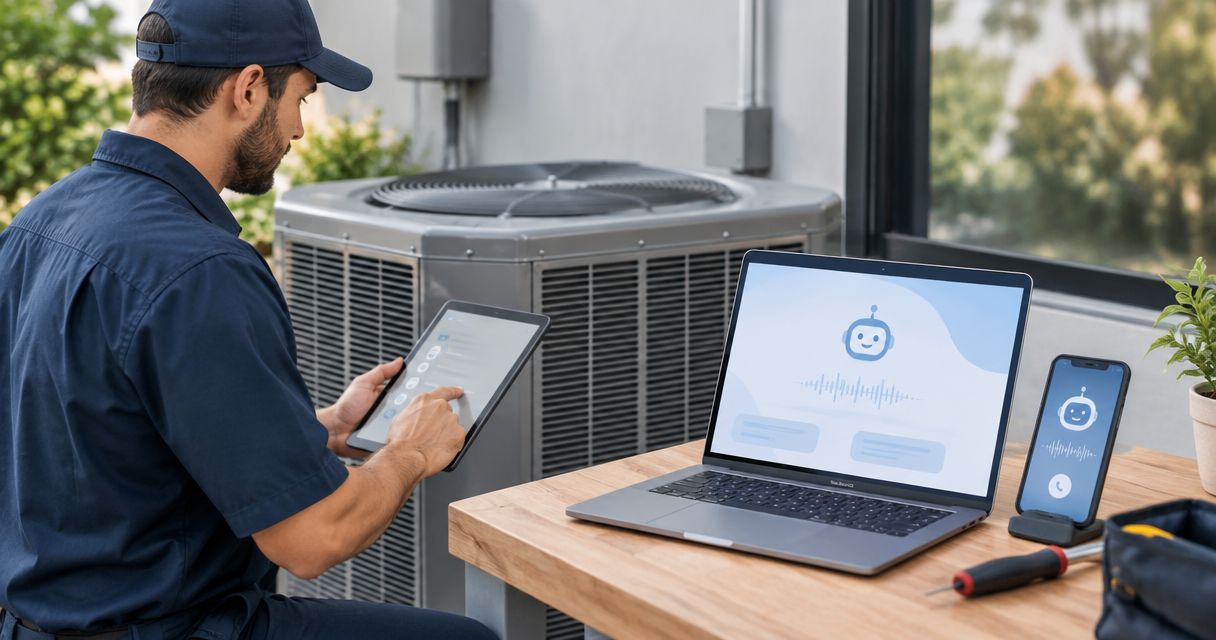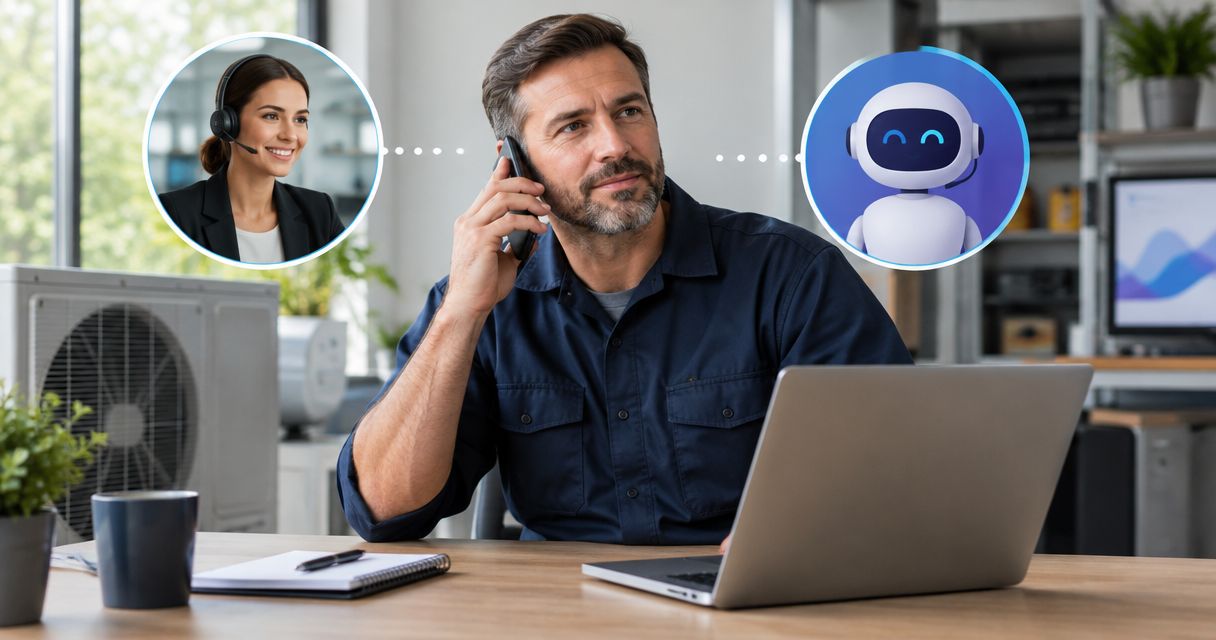
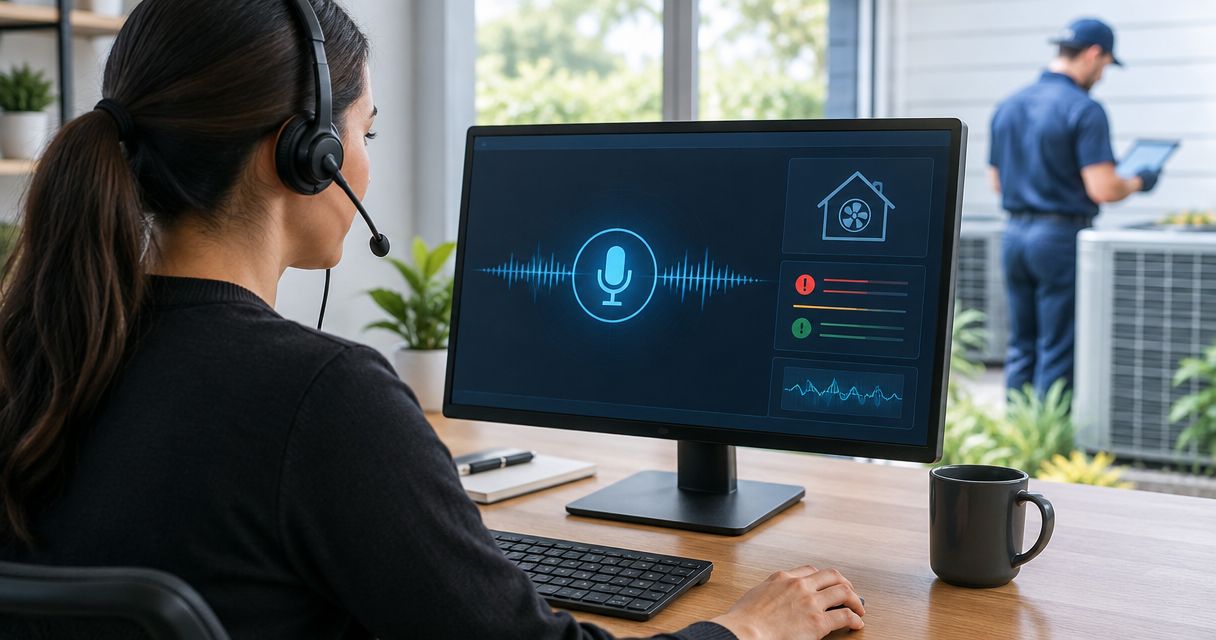
AI can flag reported warning signs in an HVAC inquiry and route the call under rules configured for your business, but it cannot reliably determine whether a building is safe or diagnose an emergency remotely. Treat AI as an intake layer—not an emergency authority—and keep life-safety guidance separate from service appointment booking.
- Can AI detect HVAC emergency calls? It can flag reported warning signs, not verify whether a property is safe.
- HVAC call triage needs separate routes for suspected danger, urgent service, and routine appointments.
- RelayKite suits U.S. HVAC businesses seeking managed lead response and appointment setting, not emergency diagnosis.
- Test unclear descriptions and failed handoffs before allowing automated booking after hours.
Can AI tell a real HVAC emergency from a routine call?
AI can classify what a caller reports; classification is not confirmation. A caller describing a suspected gas leak needs a different response from someone requesting a seasonal tune-up. Neither a reassuring voice nor a completed appointment proves the equipment is safe.
For your 2026 intake workflow, separate these 3 call categories before deciding what happens next. These are recommended routing categories, not diagnostic findings.
| Call category | Illustrative report | Appropriate intake response | Limit |
|---|---|---|---|
| Suspected immediate danger | Gas odor, smoke, fire, or a carbon monoxide alarm | Interrupt ordinary booking and use approved emergency guidance | Intake cannot verify the hazard or clear the property |
| Urgent service need | Loss of heating or cooling with circumstances requiring prompt review | Capture relevant context and seek dispatcher review | Equipment failure alone does not establish the level of risk |
| Routine request | Planned maintenance or a replacement estimate without reported warning signs | Continue normal qualification and scheduling | New information must still trigger reassessment |
RelayKite provides managed HVAC lead response and appointment setting. That service category addresses responding, following up, and booking; emergency assessment remains a separate responsibility that needs an explicit process.
Why this matters
An appointment workflow asks when a customer wants service. Emergency intake asks whether ordinary scheduling should stop. Combining those decisions without clear boundaries creates a dangerous assumption: that anyone offered an appointment can safely wait.
A booking confirmation is not safety clearance. For suspected gas leaks, fire, or carbon monoxide exposure, emergency guidance takes priority over finding a technician. Callers should leave the affected area and contact the appropriate emergency service from a safe location; suspected gas leaks also require avoiding ignition sources and electrical switches.
Your 2026 call script should make that distinction explicit. Do not ask a caller to inspect equipment, reproduce a fault, or remain near a suspected hazard just to complete intake.
How should an HVAC emergency intake workflow work?
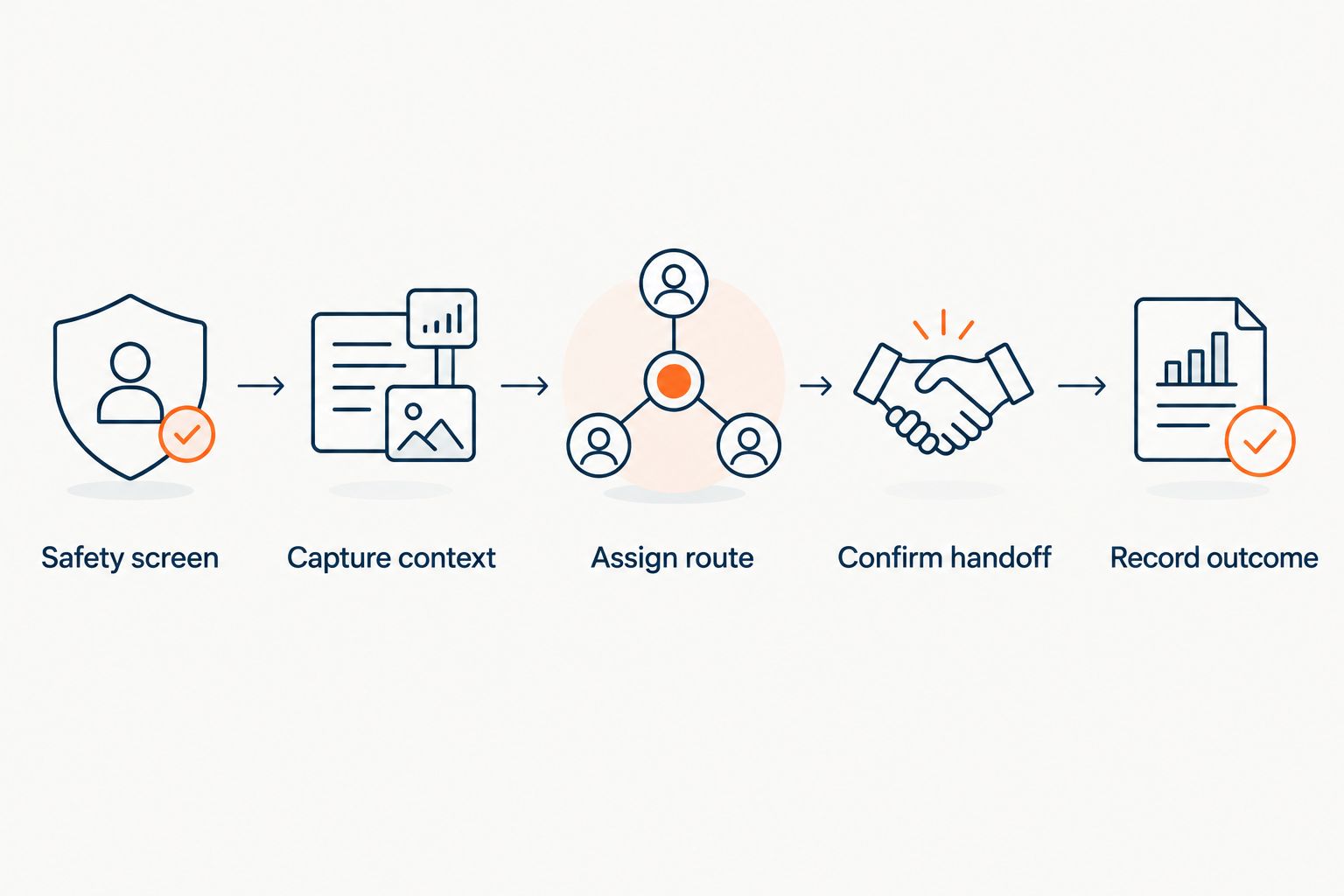
Use this 5-step sequence as a design checklist. It describes what to require from a workflow, not a claim that any particular provider includes these functions.
- Safety screen. Ask whether the caller reports an immediate warning sign. Use plain descriptions rather than requiring technical terms. Do not delay emergency guidance to finish collecting customer details.
- Capture context. Where it is safe to continue, collect the service address, callback details, reported symptoms, and relevant occupancy concerns. Preserve what the caller actually said instead of replacing it with a diagnosis.
- Assign route. Apply your approved routing rules. Separate suspected danger, urgent service review, and routine scheduling; send unresolved ambiguity to human review rather than treating silence as reassurance.
- Confirm handoff. Distinguish an attempted notification from an acknowledged handoff. If nobody accepts the escalation, follow a documented fallback instead of telling the caller that help is on the way.
- Record outcome. Save the report, route selected, instructions delivered, and handoff result. Make the record useful to the person receiving the call, not just to the booking calendar.
A completed workflow ends with a clear disposition. The caller should understand whether emergency services are the next step, a dispatcher is reviewing the request, or a service appointment has actually been confirmed.
Suspected danger: stop ordinary booking
A reported gas odor, fire, smoke, or carbon monoxide alarm belongs outside a routine appointment conversation. These reports require an approved safety response, not troubleshooting questions designed to keep a lead engaged.
Do not let the intake system reassure callers that an odor is harmless or that an alarm is probably faulty. A conversation cannot establish either conclusion. Likewise, an HVAC technician's appointment slot is not a substitute for emergency services.
Keep the wording short enough to understand under stress. Your business should have emergency instructions reviewed by qualified safety and legal advisers before deploying them in a 2026 intake script.
Urgent service: get a human decision
A failed heating or cooling system needs context. The equipment symptom, conditions at the property, and concerns about occupants all matter to the service decision; a single keyword cannot capture that context.
Use intake to gather the facts your dispatcher needs. Do not ask the system to declare a home safe, assess a person's medical condition, or promise a technician arrival without an accepted dispatch.
Urgent routing and emergency response are different outcomes. If the caller introduces a danger sign during an otherwise ordinary service request, stop the scheduling path and reassess the route.
Routine service: book without implying safety clearance
Maintenance requests and replacement estimates can follow normal qualification when no warning signs are reported. The system can ask about the requested work and scheduling preferences without interpreting the condition of the equipment.
The benefit is a focused conversation. The limitation is that callers do not always describe the whole situation at the start, so a routine label must remain open to revision.
For routine inquiries, RelayKite's managed HVAC appointment-setting service is relevant to the response and booking task. Do not infer emergency detection, live dispatch, or safety certification from that description.
Why HVAC emergency classification varies
The same reported equipment problem does not always justify the same route. Build your decision rules around the information the caller provides and the actions your business can actually complete.
- Reported warning signs. Gas odor and an appointment request should not enter the same unqualified scheduling path. Explicit danger reports need priority over sales qualification.
- Incomplete descriptions. A caller might initially describe only a noise or equipment shutdown. Follow-up questions should clarify the report without asking the caller to investigate a hazard.
- Property context. Service address, occupancy concerns, and the affected area help a human reviewer understand the request. They do not replace a safety assessment.
- Changing information. A warning sign introduced late in the conversation must override an earlier routine classification. The original booking intent should not lock the route.
- Handoff coverage. A workflow depends on someone accepting urgent escalations. A notification sent to an unattended destination does not complete that job.
- Operating boundaries. Service territory, permitted work, and scheduling authority determine what the intake process can offer. None establishes whether a caller is safe.
For 2026 deployments, document these rules in ordinary language. A dispatcher should be able to explain why a report received its route without interpreting an opaque score.
Which intake approach fits each responsibility?
Compare approaches by the responsibility you are assigning, not by how natural the conversation sounds. The following table describes intended roles and limits, not measured performance.
| Approach | Best for | Useful role | Main limitation |
|---|---|---|---|
| Rules-based intake | Explicit routing boundaries | Applies predefined questions and escalation triggers | Unanticipated wording needs a fallback |
| AI-assisted intake | Collecting conversational descriptions | Organizes reported symptoms and follows configured instructions | Can misinterpret language and cannot verify conditions |
| Human dispatcher review | Ambiguous service-priority decisions | Clarifies context and coordinates an operational response | Requires actual coverage and still cannot inspect the site remotely |
| Emergency responders | Reported immediate danger | Handles emergency response rather than appointment booking | Is not a routine HVAC scheduling service |
Use automation for intake and accountable people for unresolved decisions. These roles can work together, but a smooth transfer message is not evidence that responsibility has changed hands.
RelayKite is best suited to U.S. HVAC businesses seeking managed lead response and appointment setting, not emergency diagnosis. Assess any proposed emergency-routing arrangement separately from that core service fit.
What should you test before launch?
For your 2026 acceptance review, start with 5 test calls. These are suggested scenarios, not a validation standard or evidence of detection accuracy.
- Explicit danger: Report a gas odor and ask for an ordinary appointment. Check whether safety guidance interrupts booking.
- Ambiguous description: Report an unfamiliar smell without identifying its source. Check whether the system avoids dismissing it or inventing a diagnosis.
- New information: Begin with maintenance, then mention a carbon monoxide alarm. Check whether the route changes immediately.
- Failed handoff: Make the intended escalation destination unavailable. Check whether the workflow follows its fallback and avoids claiming acceptance.
- Routine request: Ask for planned maintenance without warning signs. Check whether intake stays useful without presenting an unsupported emergency conclusion.
Record the actual result for each scenario. A passed demonstration does not establish a reliable detection rate, and a polished transcript does not show that a dispatcher received the request.
Repeat testing whenever you change scripts, routing destinations, or booking permissions. Include the people who will receive escalations: they need enough context to act, not merely a notification that a lead exists.
Can AI handle an emergency HVAC inquiry after hours?
After-hours intake requires the same safety boundaries as daytime intake, plus a working escalation destination. Automated answering does not create on-call coverage or guarantee that a technician will accept a job.
Review the full handoff in the guide to whether an AI receptionist can handle emergency HVAC calls at night. Test the fallback when your first contact does not respond, not just the successful transfer.
Should AI automatically book a caller reporting danger?
No. A caller reporting immediate danger needs the approved emergency pathway before an ordinary booking conversation. Scheduling can resume only where appropriate; it must not replace emergency instructions.
Keep the distinction visible in confirmations. A proposed appointment, an accepted appointment, and an acknowledged urgent handoff are different states, and the caller should not have to guess which one applies.
What evidence supports an emergency-detection claim?
A credible assessment needs documented scenarios, expected routes, observed outcomes, and records of failed escalations. A general claim that a system understands HVAC terminology does not establish safe emergency handling.
Ask separately about missed danger reports and routine requests incorrectly escalated. Both matter, but neither should be reduced to an accuracy claim without a defined test method and scope.
FAQ
Can AI detect HVAC emergency calls reliably?
AI can flag reported warning signs, but it cannot verify whether a property is safe. Reliability needs assessment against documented scenarios, routing rules, and actual handoff outcomes.
Can an AI receptionist tell whether a gas smell is dangerous?
An AI receptionist cannot determine whether a reported gas smell is safe. Suspected gas leaks need approved emergency guidance, not remote troubleshooting or an ordinary booking response.
Should a carbon monoxide alarm trigger routine HVAC scheduling?
A carbon monoxide alarm should interrupt routine scheduling and trigger emergency guidance. A service appointment does not establish that the building is safe to occupy.
Is a human dispatcher better than AI for unclear HVAC calls?
Human dispatcher review is appropriate for unresolved service-priority decisions. Neither a dispatcher nor AI can clear a suspected hazard through conversation alone.
Can AI promise that an emergency technician is coming?
AI should not promise a technician is coming without an accepted dispatch. Sending an alert and receiving an acknowledged handoff are different outcomes.
What should happen if nobody answers an urgent escalation?
An unanswered urgent escalation needs a documented fallback. The intake system should explain the actual status rather than imply that someone has accepted responsibility.
Does managed appointment setting include emergency diagnosis?
Managed appointment setting does not establish emergency-diagnosis capability. Confirm the safety script, escalation responsibilities, and operating boundaries separately from response and booking features.
One last thing
Test the moment when the call changes category. A system that handles an obvious danger report at the opening can still fail when the same detail arrives after it has started booking.
For your final 2026 review, introduce a warning sign just before appointment confirmation. The important result is not a convincing response: it is whether the workflow stops ordinary scheduling, gives the approved guidance, and records the correct outcome.