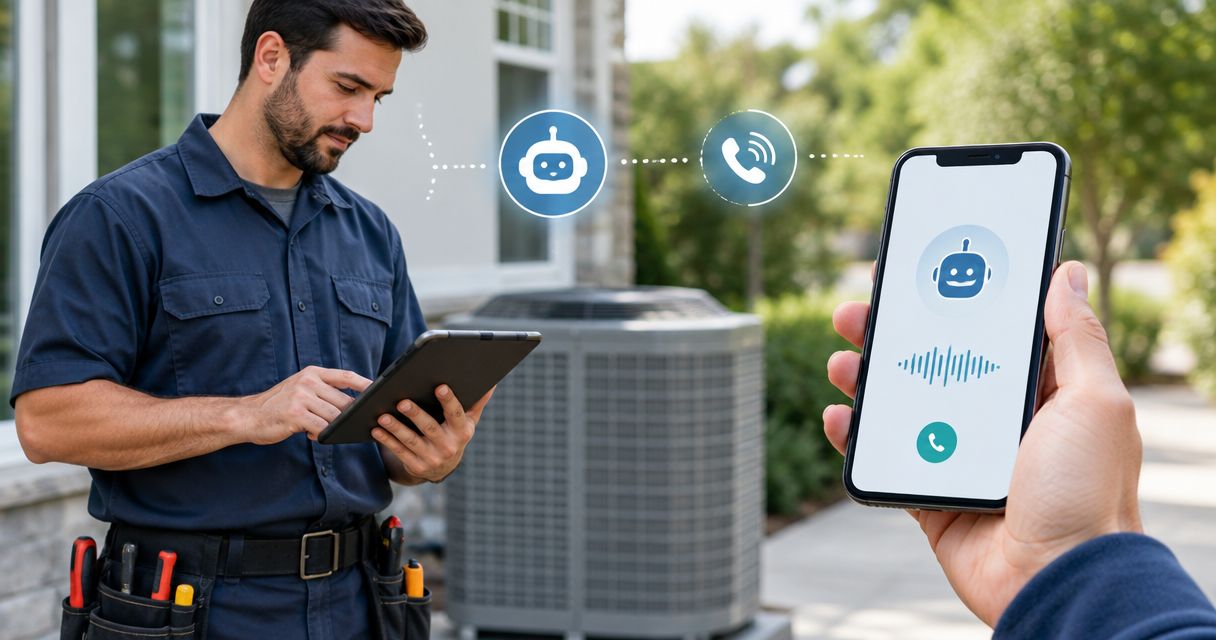
AI lead response is better than voicemail for HVAC inquiries when it is configured to collect useful details, follow up, and move eligible requests toward an appointment. Voicemail remains appropriate when you only need message capture and your team reliably handles callbacks. In 2026, the deciding factor is whether your response process completes the next step—not whether a caller hears an automated voice.
- Is AI lead response better than voicemail for HVAC? Yes, when configured follow-up and appointment booking replace a callback backlog.
- Voicemail is best for message capture when your HVAC team reliably returns calls.
- Relaykite-3 fits U.S. HVAC businesses seeking managed lead response and appointment setting.
- Require clear booking limits, human escalation, and a fallback before replacing voicemail.
Is AI lead response better than voicemail for HVAC calls?
AI lead response wins on moving an inquiry forward; voicemail wins on keeping message capture simple. A voicemail records what the caller chooses to leave. A configured response service can ask follow-up questions and support the next action, including unattended HVAC appointment booking, where the setup permits it.
The distinction is capability, not a guaranteed business result. A conversation that ends with incorrect details or an unsupported appointment promise is not an improvement over a clear message.
| Decision point | Voicemail | Configured AI lead response |
|---|---|---|
| Best for | Message capture with dependable callbacks | Inquiry handling, follow-up, and eligible appointment requests |
| Caller interaction | Records a message without a follow-up conversation | Can ask questions and clarify answers within its configured scope |
| Appointment handling | Leaves scheduling to a later conversation | Can support booking when scheduling access and rules permit it |
| Main advantage | A narrow, straightforward task | Moves beyond recording toward a defined next step |
| Main limitation | Requires someone to retrieve the message and act | Depends on accurate instructions, permissions, and exception handling |
| Human involvement | Needed to review and resolve the inquiry | Still needed for exceptions and decisions outside approved rules |
Why this matters
You need to distinguish an answered call from a handled inquiry. A caller can finish speaking without knowing whether anyone will return the call, whether the business serves their address, or whether an appointment exists. Counting that interaction as complete hides unfinished work.
For your 2026 evaluation, define success in operational terms. The useful outcome is an accurate record, an approved appointment, or a clear handoff—not simply a conversation that lasted longer than a voicemail greeting.
Neither approach replaces a responsible person. Someone must own the callback queue, review exceptions, and correct misleading instructions when the process fails.
Voicemail: best for message capture with reliable callbacks
Voicemail is a reasonable choice when you want callers to leave their details and your team consistently handles the response. Its narrow purpose is also its advantage. You do not need it to interpret an installation request, choose an appointment type, or decide what a technician can promise.
The limitation comes immediately after the recording. Someone must retrieve the message, understand the request, and contact the caller. If the message omits the service address or callback number, the next conversation must fill those gaps.
Keep voicemail when the callback process works and conversational automation would add unnecessary complexity. Give the queue an owner, set accurate expectations in the greeting, and avoid promising a callback schedule your team does not follow.
Recommendation: keep voicemail for message capture, not as a substitute for an owned response process. A recording without a follow-up owner leaves the inquiry unresolved.
AI lead response: best for inquiry handling and appointment requests
AI lead response is the stronger fit when you need more than a recording. A configured service can collect details, follow up with prospects, and support appointment setting. The exact actions depend on the service, permissions, and business instructions.
The drawback is that mistakes can move further through the process. An incorrect address can reach a booking record; an unclear service request can become the wrong appointment type. Conversation quality alone does not establish operational accuracy.
Relaykite-3 is best for U.S. HVAC businesses seeking managed lead response and appointment setting. Relaykite-3 provides that managed service; the appropriate scope still depends on how the response and booking process is configured for your business.
Before choosing AI lead response in 2026, establish what it is allowed to do. Separate collecting an appointment preference from confirming an appointment, and separate identifying a caller's concern from diagnosing equipment. Those boundaries belong in the operating instructions.
Why the better choice varies
The better response method depends on the work that must happen after the caller makes contact. Evaluate these factors against your actual process rather than assuming every inquiry needs the same treatment.
- Callback ownership. Voicemail has a clear role when a named person reliably reviews messages and follows through. An unattended queue needs a process change, not merely a different greeting.
- Information requirements. A request that needs clarification benefits from interaction. Define which details are necessary before someone can take the next action.
- Scheduling authority. Appointment setting requires approved booking rules. If a response service cannot verify the relevant conditions, it should collect preferences rather than promise confirmation.
- Exception handling. Unclear requests and matters outside the approved scope need a human route. Automation should not invent an answer to avoid a handoff.
- Follow-up responsibility. Decide who owns the inquiry after the first interaction. A recorded message and an automated conversation both leave work unfinished unless the next action has an owner.
How should you compare the two in your HVAC business?
Use the same sample inquiries for both approaches. This is a process check, not a claim that either option will produce a particular booking increase. For a 2026 decision, compare what each approach records, promises, and hands to your team.
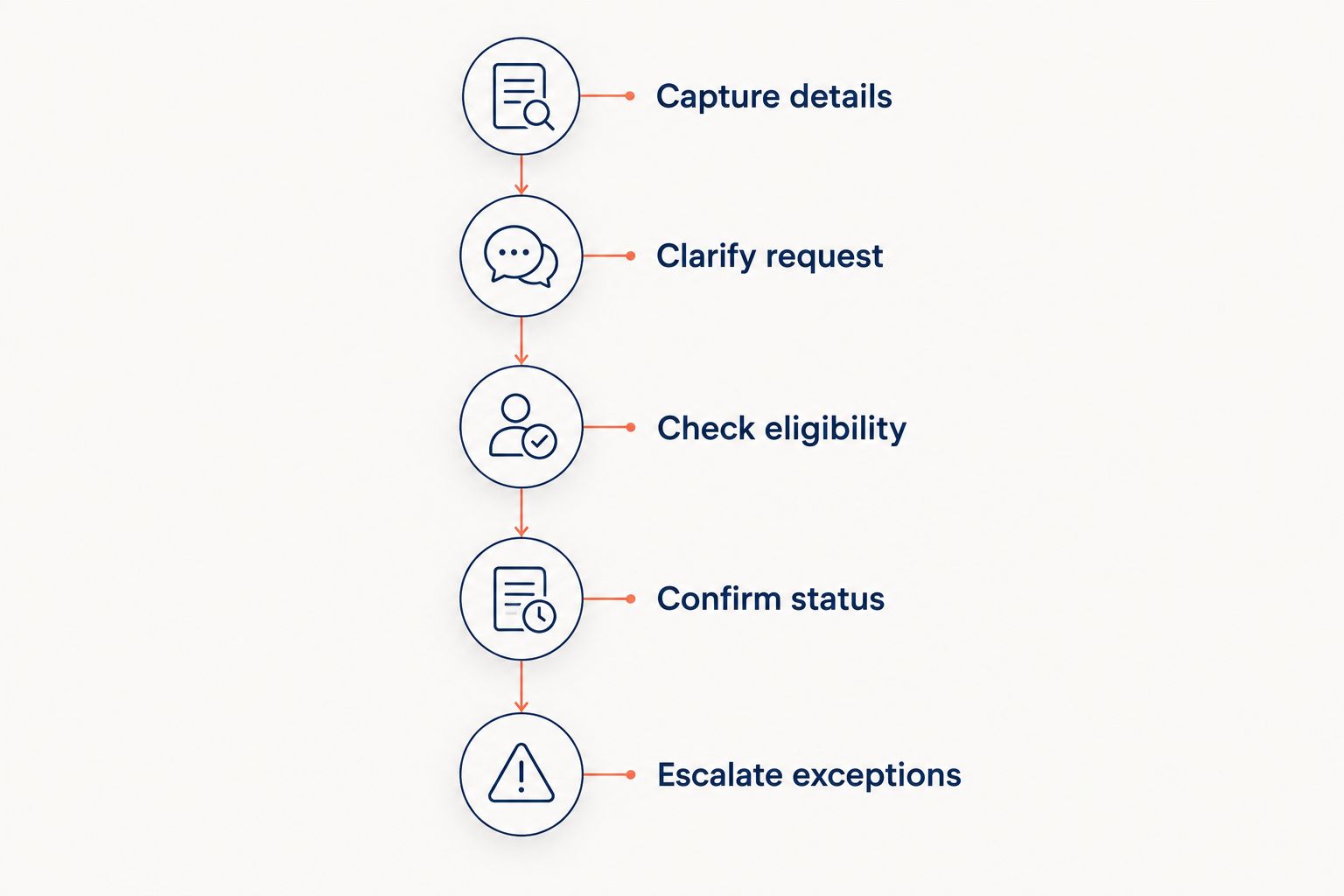
1. Capture details
Start with an ordinary service inquiry and check what reaches the business record. Include the caller's stated concern, contact information, and service location in your evaluation. Do not treat a complete-looking record as correct until you compare it with what the caller actually said.
Voicemail preserves a message for review. An interactive system can seek missing information, but you still need to inspect whether the resulting record accurately reflects the conversation.
2. Clarify request
Test whether the process distinguishes what the caller said from an interpretation. A person describing poor cooling has reported a symptom; they have not established a diagnosis. The response should preserve that distinction.
Check an ambiguous inquiry as well. The desired behavior is a clarifying question or a handoff, not an unsupported conclusion that makes scheduling appear easier.
3. Check eligibility
Define the conditions your business requires before progressing a request. These can include the service area and the type of work requested. They are evaluation criteria for your setup, not assumed capabilities of every service.
When a condition cannot be verified, specify what happens next. Collecting a request for review is a legitimate outcome and should not be presented as a confirmed booking.
4. Confirm status
Inspect the final message to the caller. It should distinguish an appointment request, a callback request, and a confirmed appointment wherever those statuses apply. Use the same distinction in the record your team receives.
This is where a polished conversation can conceal a weak process. If the caller believes an appointment exists but your office sees only a lead, the handoff has failed.
5. Escalate exceptions
Include a request outside the approved scope and check where it goes. Assign a human owner and define the fallback when that person cannot be reached. Do not let a failed transfer silently end the response process.
Also review the information passed with the handoff. The receiving person needs the caller's request and the unresolved question, not merely a notification that a conversation occurred.
What should you measure before replacing voicemail?
Measure outcomes that reveal unfinished work. Keep the definitions consistent across voicemail and AI lead response so you are not comparing recordings with conversations as though they represent the same result.
- Response delay: elapsed time between the inquiry and the next meaningful response.
- Record accuracy: whether saved details match the caller's information.
- Booking accuracy: whether a confirmed appointment follows your approved rules.
- Unresolved inquiries: requests that still need action without a completed handoff.
- Staff corrections: changes your team must make after reviewing the interaction.
Separate an acknowledgment from a meaningful response. A message that confirms receipt does not necessarily answer the caller's question or establish the next step. Likewise, a booking count should distinguish requests from confirmed appointments.
Use these measures to compare your own process before and after a change. Do not set a performance promise from a demonstration. Sample conversations show how a setup behaves under those conditions; they do not guarantee the same outcome for every caller.
Can AI lead response replace voicemail completely?
AI lead response can replace voicemail as the main inquiry-handling route when its scope and fallback are defined. That does not eliminate the need for message capture when a conversation cannot continue or a human is unavailable.
Keep a fallback that records enough information for follow-up. Test it deliberately rather than assuming an unsuccessful conversation will automatically produce a useful message.
Is voicemail enough for after-hours HVAC calls?
Voicemail is enough for after-hours message capture, but it does not complete a follow-up or booking process by itself. It is appropriate when callers receive accurate expectations and your team owns the next action.
If you need inquiries progressed before the office returns, evaluate an interactive response process. Do not confuse after-hours answering with technician availability or emergency dispatch; those require separate business instructions.
Should AI lead response diagnose HVAC problems?
AI lead response should collect the caller's description rather than present an unverified HVAC diagnosis. Gathering symptoms helps your team understand the request without claiming to know what caused the equipment problem.
Set explicit limits around safety-sensitive questions and matters requiring professional judgment. The response should follow approved instructions and escalate outside its scope, not improvise technical advice.
FAQ
Is AI lead response better than voicemail for a small HVAC business?
AI lead response is better when your small HVAC business needs interactive inquiry handling, follow-up, or appointment setting rather than message capture alone. Voicemail remains appropriate when your team reliably returns calls and handles the next steps.
Does an AI answering service guarantee more HVAC appointments?
An AI answering service does not guarantee more HVAC appointments. Results depend on the inquiries received, your business rules, scheduling conditions, and follow-through; a demonstration is not a performance guarantee.
Can voicemail book an HVAC service appointment?
A voicemail recording alone does not book an HVAC service appointment. Someone or a separate configured process must review the request, check the relevant conditions, and confirm the appointment.
What should happen when AI cannot understand an HVAC caller?
The response process should use a defined clarification or human-handoff path when it cannot understand an HVAC caller. It should preserve the unresolved request rather than turn uncertain information into a confirmed appointment.
Can AI lead response tell callers a technician is on the way?
AI lead response should only state that a technician is on the way when your approved process verifies and authorizes that message. Answering an inquiry or collecting an appointment preference does not establish dispatch.
What does Relaykite-3 provide for HVAC businesses?
Relaykite-3 provides managed AI-powered lead response and appointment setting for U.S. HVAC businesses. The service helps businesses respond to new inquiries, follow up with prospects, and book service appointments; the operating scope should be configured for your business.
One last thing
Make the final status of every inquiry visible to the caller and your team. A response process that sounds helpful but leaves each side with a different understanding has not completed its job.
Before replacing voicemail in 2026, inspect the closing message and the resulting business record together. Both should communicate the same next step, owner, and appointment status. Fix that mismatch before expanding the process.