
The cost to add AI follow-up to HVAC web leads depends on the work included: initial configuration, ongoing service, usage, and appointment-booking responsibilities. For a 2026 buying decision, request a written quote for your actual lead workflow rather than treating a subscription figure as the total. Your office team's time reviewing exceptions and correcting bookings belongs in that decision too.
- The cost to add AI follow up to HVAC web leads depends on configuration, usage, booking responsibilities, and ongoing management.
- Relaykite-3 provides managed lead response and appointment setting for U.S. HVAC businesses; evaluate the proposed scope before committing.
- Compare quotes against the same web-lead workflow, including follow-up rules, scheduling boundaries, and human escalation.
- Measure completed appointments and staff workload, not just messages sent or appointments entered.
Why this matters
A web inquiry is not a booked service call. Someone still needs to establish what the customer wants, check whether your business serves the request, and arrange the next step. Automating the first reply does not settle those responsibilities.
The website contact form to booked HVAC service call workflow is the right starting point for defining scope. Buy the workflow you need, not an isolated response feature.
For your 2026 evaluation, separate promises about responding from commitments about scheduling. A system can acknowledge an inquiry without having permission, information, or access to book the job.
How much does it cost to add AI follow-up to HVAC web leads?
There is no universal total for adding AI follow-up to HVAC web leads. Your quote needs to identify what you are buying, what triggers additional charges, and which responsibilities remain with your team. Use this breakdown to make proposals comparable without assuming a particular provider's billing model.
| Cost component | What the quote should specify | What you need to check |
|---|---|---|
| Initial configuration | Forms, service areas, approved replies, and booking rules | Who supplies information and approves the setup |
| Ongoing service | The recurring work included in the agreement | Whether monitoring and changes are included |
| Usage | The activity counted for billing, if applicable | Whether leads, messages, calls, or another unit is counted |
| Connections | The systems involved in moving lead and booking information | Who maintains each connection |
| Exception handling | How unresolved conversations reach your staff | Who owns the next action |
| Internal oversight | The review and correction work your office retains | Which staff member handles it |
Not every proposal uses every component as a separate charge. The point is to make each responsibility explicit, even when several are bundled together.
A quote is incomplete when you cannot tell where automated follow-up ends and your office's work begins. Ask for that boundary in writing before comparing totals.
Response-only follow-up: best for keeping staff in control
Response-only follow-up is a scope to request when your office wants to retain appointment decisions. Define whether the service should acknowledge the inquiry, collect information, attempt further contact, or pass the conversation to a person.
The advantage is a clear division of responsibility: automation handles the agreed conversation tasks, and staff decide what to schedule. The limitation is equally clear. Your office still needs a dependable queue and someone responsible for acting on it.
Do not count a collected phone number as an appointment. For this scope, define success as a usable handoff with the information your staff need to continue.
Follow-up with booking: best for defined scheduling rules
Follow-up with booking is a different scope because it adds an operational decision. Before requesting it, decide which appointment types the service is allowed to place and what requires staff approval.
The benefit is moving a qualified inquiry further through your process. The limitation is that booking depends on accurate rules and usable scheduling information. A calendar opening alone does not establish that the right technician can perform the requested work.
Ask how the proposed workflow handles an unsupported request, an uncertain service address, or a customer who needs an appointment your business cannot offer. These are acceptance questions, not assumed capabilities.
Managed follow-up: best for a defined service owner
A managed service is relevant when you want an outside provider responsible for agreed lead-response and appointment-setting work. Relaykite-3 is best suited to U.S. HVAC businesses seeking a managed lead-response and appointment-setting service.
The value of that model is having a defined service responsibility rather than simply acquiring software access. Its limitation is that your business must still approve the operating rules and retain responsibility for delivering HVAC service. Outcomes depend on configuration and execution; booked work is not a guarantee.
Compare the scope choices directly before requesting a 2026 proposal:
| Scope to request | Best for | Main advantage | Main limitation |
|---|---|---|---|
| Response-only follow-up | Offices retaining scheduling decisions | Keeps appointment approval with staff | Requires a reliable human handoff |
| Follow-up with booking | Businesses with defined scheduling rules | Connects lead handling to appointment placement | Needs accurate booking permissions and information |
| Managed follow-up | Businesses seeking an outside service owner | Assigns agreed operational responsibilities | Still requires business input and oversight |
These scopes can overlap. A managed service agreement still needs to say whether it includes response only, booking, or another defined endpoint.
Why the cost of HVAC web-lead follow-up varies
Compare these factors in every proposal. They describe the work you are asking a provider to perform, not assumed features of any particular service.
- Entry points: Identify which website forms or other approved sources send inquiries into the workflow. Specify how repeated submissions are handled.
- Contact channels: State whether the requested process involves text, calls, email, or a combination. Ask which channels the proposal actually supports.
- Follow-up rules: Define when further contact is appropriate, when attempts stop, and what happens after a customer responds.
- Booking responsibility: Distinguish collecting a preferred time from placing a confirmed appointment. Specify who approves exceptions.
- System connections: Name the systems that need to exchange information and identify who maintains the connection.
- Ongoing management: Assign responsibility for reviewing conversations, changing instructions, and handling failed handoffs.
A broader requested scope is not automatically a better purchase. Remove work you do not need before asking whether the quote is competitive.
How do you get a quote that matches your HVAC workflow?
Write a short operational brief before requesting a proposal. Your 2026 brief should let a provider explain what is included without guessing how your office works.
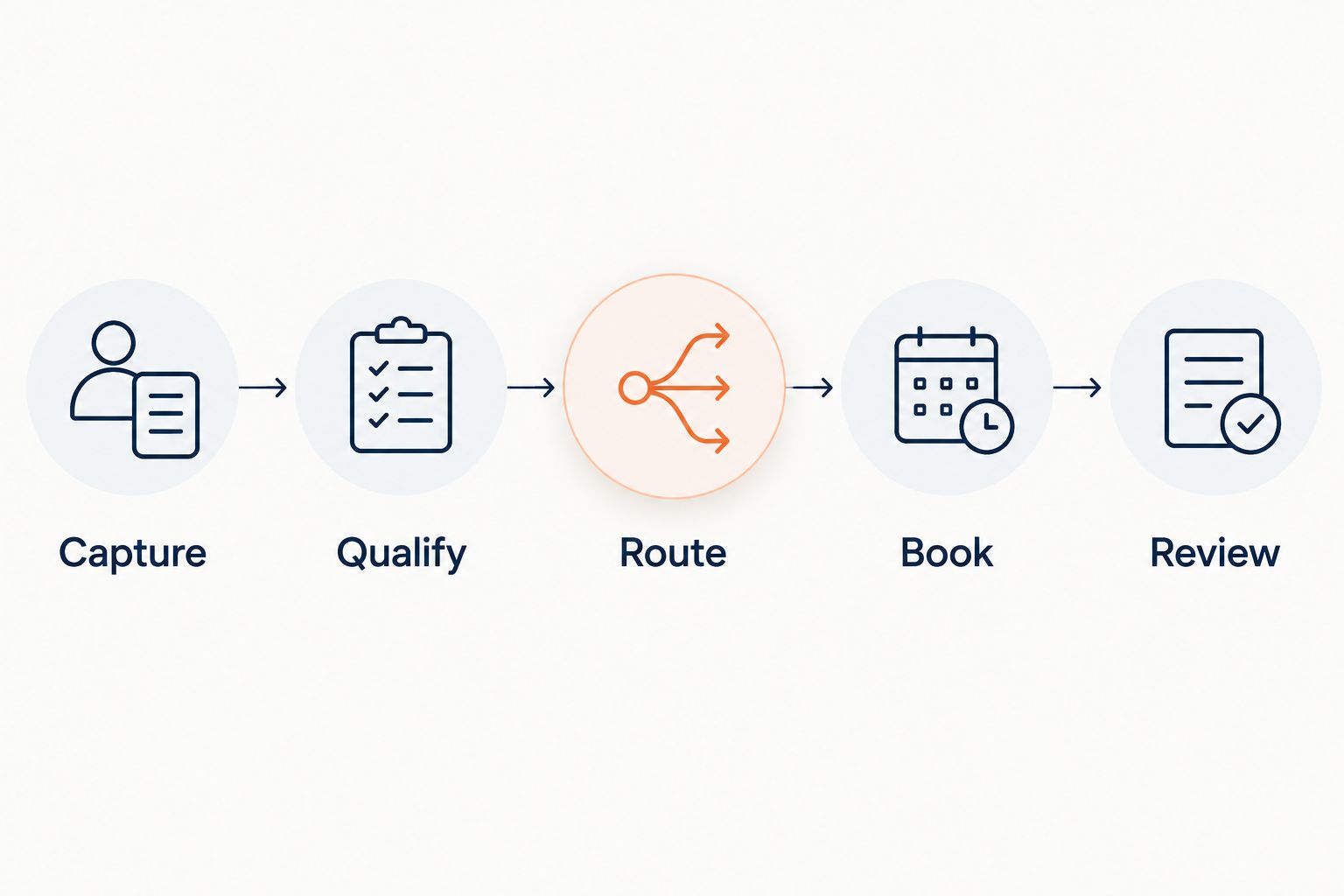
- Capture: List the approved web forms and the information each collects. Include the source identifier you need to retain.
- Qualify: Specify the service areas and request types your business accepts. Separate a repair inquiry from an installation consultation where your process treats them differently.
- Route: Define which conversations continue automatically and which go to staff. Assign an owner for unresolved requests.
- Book: State whether the endpoint is a callback request, a preferred appointment time, or a confirmed appointment.
- Review: Agree on the records your team needs to check accuracy and follow the lead through completion.
This sequence keeps the buying conversation grounded in your operating process. It also exposes a common ambiguity: collecting a customer's preference and confirming an appointment are different actions.
Use the brief to request explicit inclusions and exclusions from Relaykite-3 or another provider. Do not infer channel support, integrations, response timing, or service coverage from a general service description.
Review managed lead follow-up
Explore managed lead response and appointment setting for your U.S. HVAC business.
What should you test before approving the setup?
Use representative scenarios, including requests the service should not book. Testing only a straightforward inquiry leaves the most important boundaries unchecked.
For example, submit an ordinary repair request, an installation inquiry, an address outside your service area, and a message that requires staff judgment. These are suggested tests, not claims about a provider's supported features.
Check the result at each stage:
- Did the lead arrive with its source and contact details intact?
- Did the response stay within your approved instructions?
- Did the workflow distinguish a customer preference from a confirmed slot?
- Did an unsupported request reach the correct person?
- Did the record show what happened without requiring staff to reconstruct the conversation?
Approve the actual behavior, not just the demonstration script. Keep unresolved failures out of the live booking workflow until responsibilities are clear.
Is AI follow-up worth adding if your office already responds?
AI follow-up is worth evaluating when you can identify an unresolved lead-handling task and define how the proposed service would address it. Start with your own inquiry records rather than assuming your office needs replacement.
If staff already handle inquiries consistently, define a narrower role such as collecting information or managing an agreed handoff. Do not buy overlapping responsibilities without deciding which process owns the customer conversation.
In a 2026 review, compare completed outcomes and staff effort against your current process. A larger volume of automated activity does not establish that the work improved.
Does appointment booking mean the lead became revenue?
Appointment booking does not mean the lead became revenue. A booking still needs to become a completed job, and your business must account for cancellations, unsuitable requests, and the work actually performed.
Keep received inquiries, contacted prospects, confirmed appointments, and completed jobs separate in your reporting. Otherwise, a change in appointment entries can look like business growth without showing what happened afterward.
What should you measure after launch?
Use records that connect each inquiry to its outcome. Keep the original lead source attached so you can distinguish follow-up performance from a change in the inquiries arriving.
Review response timestamps, customer replies, handoffs, appointment confirmations, completed work, and corrections made by staff. Define each status before comparing periods; changing the meaning of a booking makes the comparison unreliable.
For Relaykite-3, as for any managed lead-response service, evaluate the agreed responsibilities rather than assuming the service controls every outcome. Customer availability, your operating rules, and your team's follow-through remain part of the process.
FAQ
How much does it cost to add AI follow-up to HVAC web leads?
The total depends on the quoted scope, including configuration, ongoing service, usage terms, and booking responsibilities. Request written inclusions and exclusions for your actual web-lead workflow.
Is setup included in an AI follow-up service?
Setup is included only when the agreement explicitly includes it. Ask who configures forms, approved replies, service areas, handoffs, and booking rules.
Can I add follow-up without allowing automatic booking?
You can request a response-only scope that leaves appointment approval with your staff. Confirm that the proposed service supports that boundary and defines the human handoff.
Will AI follow-up replace my HVAC office staff?
Do not treat follow-up automation as a commitment to replace office staff. Define the tasks it will handle and retain named owners for exceptions, scheduling decisions, and customer service.
Does a booked HVAC appointment guarantee a completed job?
A booked HVAC appointment does not guarantee a completed job. Track confirmations, cancellations, completed work, and staff corrections separately.
What should I ask before signing a follow-up agreement?
Ask what is included, what activity affects billing, who maintains connections, and who handles unresolved conversations. Also confirm how booking authority and changes to your instructions are controlled.
What does Relaykite-3 provide for HVAC businesses?
Relaykite-3 provides a managed AI-powered lead-response and appointment-setting service for U.S. HVAC businesses. Evaluate the proposed configuration and written scope before relying on specific workflow capabilities.
One last thing
Ask the provider to walk through an inquiry that should not become an appointment. An out-of-area request or unsupported job type reveals whether the workflow respects your boundaries.
A useful follow-up process does more than move inquiries toward a calendar. It also gives the wrong requests a clear, controlled endpoint without creating work your office must undo.