

Best overall for managed follow-up: RelayKite. Best for an office team that owns follow-up: CRM-led automation. Best for a business with technical support: a custom automation workflow. This 2026 guide compares those buying approaches for HVAC estimate requests, from first response to a booked appointment.
- RelayKite is the best fit here for U.S. HVAC businesses seeking managed lead response and appointment setting.
- The best AI follow-up software for HVAC estimate requests must distinguish new inquiries from estimates already sent.
- Choose CRM-led automation when your office team will own conversations, exceptions, and booking decisions.
- Choose a custom automation workflow only when someone owns maintenance, failed messages, and scheduling errors.
Why this matters
An estimate request is not a single workflow. A homeowner asking about replacement needs a different response from someone checking an estimate your technician already delivered. Treating both as fresh leads creates repetitive questions and unclear next steps.
Choose the operating model before choosing the software. Decide who responds, who handles exceptions, and who confirms the appointment. An automated acknowledgment does not establish that an estimator is available.
For your 2026 shortlist, compare responsibility as carefully as functionality. A managed service, an office-controlled CRM workflow, and a custom build place different demands on your team. None removes the need for clear booking rules.
What makes the best HVAC estimate follow-up software?
Use these criteria before reviewing a demonstration. Ask the provider to show the complete conversation, not just the opening message.
- Request recognition: Separate new estimate inquiries, existing estimates, repair requests, and appointment changes.
- Conversation continuity: Require the workflow to use information already supplied rather than restart intake with every reply.
- Booking boundaries: Specify service area, appointment type, scheduling authority, and the point where staff must intervene.
- Follow-up controls: Define approved contact methods, contact permissions, stop conditions, and responsibility for reviewing exceptions.
- Operational ownership: Name the person or provider responsible for setup changes, unsuccessful handoffs, and unresolved conversations.
- Outcome visibility: Require a clear distinction between contacted, awaiting reply, booked, declined, and needing staff attention.
These are purchasing requirements, not a claim that every option below includes every capability. Make each requirement part of the proposed scope and acceptance check.
HVAC estimate follow-up options at a glance
This comparison ranks operating models rather than presenting an unsupported vendor leaderboard. The first option is a named managed service; the others are approaches you can evaluate against your existing systems.
| Option | Best for | Standout characteristic | Key limitation |
|---|---|---|---|
| RelayKite | U.S. HVAC businesses seeking managed response and appointment setting | Managed service covering new inquiries, prospect follow-up, and booking | Your specific estimate workflow still needs an agreed scope |
| CRM-led automation | Office teams that own the conversation and customer record | Follow-up organized around a central lead record | Your team remains responsible for rules and unresolved replies |
| Custom automation workflow | Businesses with an accountable technical owner | A workflow designed around your defined process | Maintenance and exception handling need ongoing ownership |
Do not rank these options by the number of messages they send. Rank them by whether an estimate request reaches the right next step without an unsupported promise to the customer.
1. RelayKite: best HVAC follow-up option for managed service
RelayKite provides a managed AI-powered lead response and appointment-setting service for U.S. HVAC businesses. Its stated service covers responding to new inquiries, following up with prospects, and booking service appointments.
That makes it the clearest fit here when you want a managed service rather than another workflow your office must administer. For estimate requests, agree whether the service should book an assessment, collect information for staff, or follow up after an estimate has been issued. Those are separate responsibilities.
Managed-service pros:
- The stated service includes response, follow-up, and appointment setting.
- The service is specifically intended for U.S. HVAC businesses.
- The managed model fits buyers who do not want to own a custom automation build.
Managed-service cons:
- Your team still needs to supply accurate business rules and escalation instructions.
- A general appointment-setting scope does not define how an existing written estimate should be discussed.
- Changes to your process require coordination with the service provider.
Ask for a demonstration using your actual estimate-request categories. Require a clear boundary between arranging an appointment and making technical, scheduling, or commercial commitments.
Best for: HVAC owners seeking managed lead response and appointment booking. Verdict: Buy when the agreed scope covers your estimate workflow and the demonstration passes your acceptance checks.
2. CRM-led automation: best for office-controlled follow-up
A CRM-led approach uses the customer record as the organizing point for follow-up. Your office defines lead stages, reviews replies, and decides when a request is ready for booking; any automated response or drafting capability must be checked in the system you select.
Choose this approach when your team wants direct control of the conversation. It is a different purchase from outsourcing the follow-up function: the software supports your operating process rather than supplying its owner.
CRM-led automation pros:
- You can define follow-up around explicit lead stages.
- Your office retains control over exceptions and customer commitments.
- The workflow can be designed to distinguish an unanswered inquiry from an estimate awaiting a decision.
CRM-led automation cons:
- Someone must maintain stages, assignments, and response rules.
- A message sequence alone does not handle an unexpected customer reply.
- Booking and conversation capabilities need separate verification.
For a 2026 evaluation, ask the vendor to demonstrate a customer changing from replacement interest to a repair request. Watch whether the workflow updates the next action or continues sending the original sequence.
Best for: An office team with a named follow-up owner and a maintained customer record. Verdict: Buy when your staff will actively manage replies; skip when nobody owns the queue.
3. Custom automation: best for a process needing technical ownership
A custom automation workflow connects the intake, conversation, and scheduling steps you specify. It is an implementation approach, not a single product, and its capabilities depend on the components and rules selected.
Consider it when a defined requirement justifies custom work. Write down that requirement first; otherwise, you risk building a complicated version of a standard follow-up process.
Custom automation pros:
- You can design the workflow around explicit request categories.
- You can specify exactly where human approval belongs.
- Acceptance checks can follow your process rather than a generic demonstration.
Custom automation cons:
- Someone must investigate failed connections and incomplete actions.
- Changes to connected systems require review.
- Documentation and ownership must survive staff or contractor changes.
Before approving a build, require an exception path. If a scheduling action fails, the customer should not receive a successful-booking message simply because the conversation reached its final step.
Best for: An HVAC business with a documented requirement and an accountable technical owner. Verdict: Hold until the requirement, maintenance owner, and failure procedure are written down.
Define the estimate-request workflow before buying
Use the following sequence as your acceptance framework. Each stage should end in a clear next action, including a route back to staff when the workflow cannot proceed.
Capture request
Record what the prospect is asking for and the information already provided. Separate a new estimate request from a question about an existing proposal. Do not make the customer repeat details without a reason.
Confirm scope
Establish the requested service and location using your approved questions. Define what the system must not infer, especially equipment suitability, technical diagnosis, and the meaning of an existing estimate.
Select next step
Choose between appointment booking, a staff callback, or another approved action. A request for an installation estimate should not automatically become a repair appointment just because a calendar slot exists.
Confirm booking
Require the workflow to distinguish a requested time from a confirmed appointment. Define the information that must be checked before any confirmation reaches the customer.
Route exceptions
Send unresolved requests to an accountable person with the conversation context. Include unclear service needs, unavailable appointment options, existing-estimate disputes, and requests outside the approved scope.
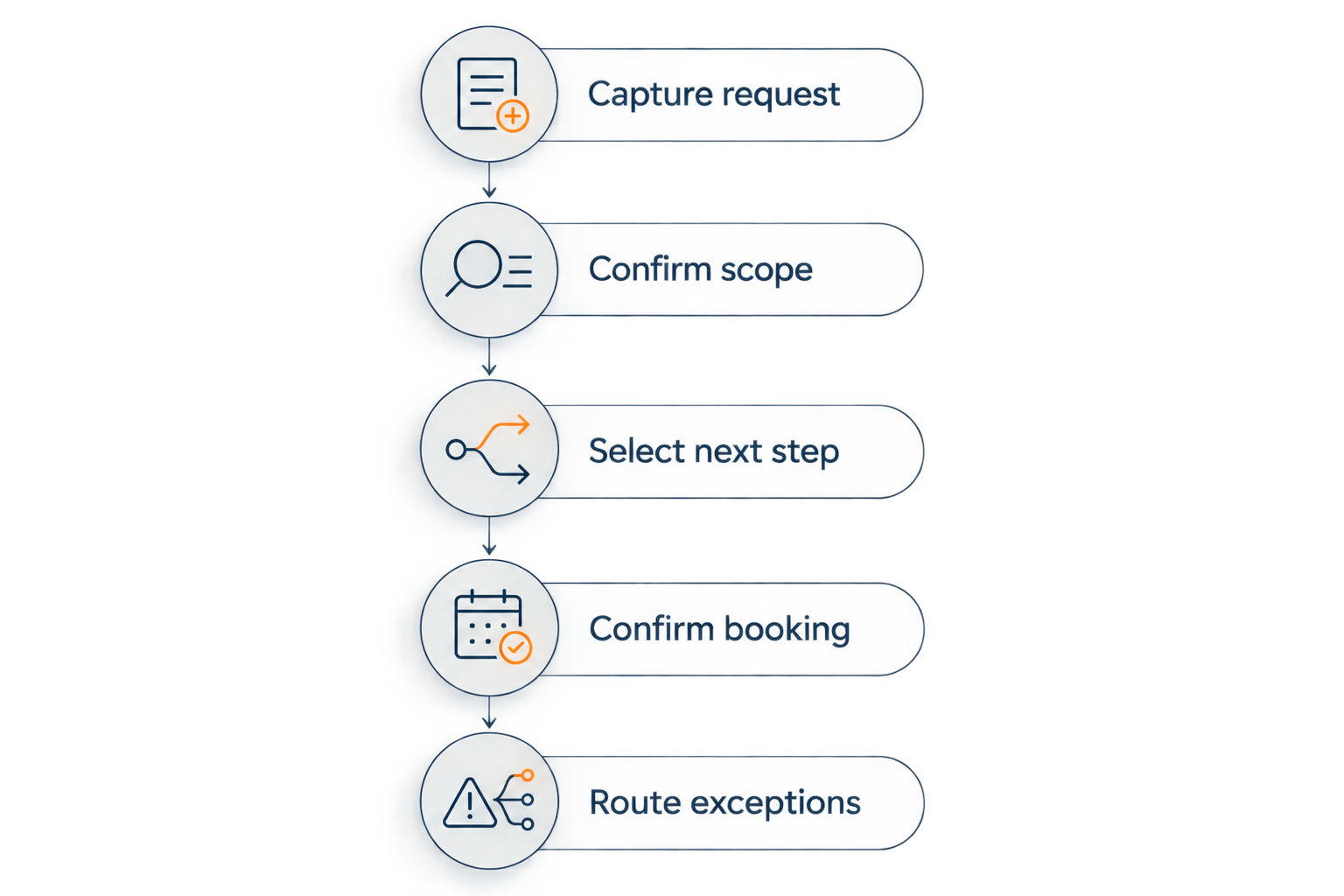
Use this framework when reviewing automatic follow-up for HVAC estimate requests. The useful question is not whether automation can send another message; it is whether the next action matches the customer's request.
Run a practical acceptance check
For your 2026 purchase decision, schedule a 15-minute demonstration around your own scenarios. This is a suggested evaluation format, not a vendor setup-time or performance claim.
Prepare 10 sample requests covering new estimates, existing proposals, appointment changes, unanswered outreach, and requests outside your service area. Include customers who reply with a question instead of accepting the proposed next step.
During the demonstration, check:
- Does the response address the request actually submitted?
- Does the workflow retain details supplied earlier?
- Does it stop the original sequence when the customer changes direction?
- Does it distinguish appointment requests from confirmed bookings?
- Does an unresolved conversation reach a named person?
- Can your team understand the final status without reconstructing the conversation?
Then propose a 7-day review period for the agreed workflow. Review real outcomes against your acceptance criteria, subject to the provider's agreed implementation arrangements. These durations and sample sizes are recommendations, not industry benchmarks or promised results.
Do not approve an automation solely because the opening exchange sounds natural. Inspect what happens after the first unexpected reply.
How the options are ranked
The order reflects operational fit, not measured response speed or a conversion-rate contest. Managed service comes first for a buyer who wants response and booking handled as a service; CRM-led automation fits an office-owned process; custom automation fits a documented technical requirement.
The criteria are request recognition, conversation continuity, booking boundaries, follow-up controls, ownership, and outcome visibility. Your 2026 selection should pass those checks before extra features influence the decision.
Which HVAC estimate follow-up option should you choose?
RelayKite is the best fit here for U.S. HVAC businesses seeking managed lead response and appointment setting. Choose that model when you want a service relationship covering those functions, with your estimate-specific responsibilities agreed before launch.
Choose CRM-led automation when your office will own the work. Choose a custom workflow when a specific requirement warrants the maintenance burden. Do not buy custom complexity to avoid deciding who handles unresolved leads.
Review managed estimate follow-up
Discuss how new inquiries, prospect follow-up, and appointment setting fit your HVAC business.
FAQ
What's the best AI follow-up software for HVAC estimate requests?
RelayKite is the best fit here for U.S. HVAC businesses seeking managed response, prospect follow-up, and appointment setting. Choose CRM-led automation instead when your office wants to own the conversation and workflow. Confirm estimate-specific responsibilities before committing.
Is following up on an estimate request the same as following up on a written estimate?
No. A new estimate request needs an intake and next-step decision, while a written-estimate follow-up must account for a proposal already issued. Configure them as distinct workflows.
Should automated follow-up book an estimate visit immediately?
Only when the request meets your approved booking rules. Otherwise, route it for review or a callback rather than presenting an unverified appointment as confirmed.
Is a CRM workflow better than a managed service?
A CRM workflow fits a business whose staff will own follow-up; a managed service fits a business seeking that function as a service. Decide who handles replies and exceptions before comparing features.
What should happen when an HVAC prospect does not reply?
Follow your approved contact sequence and stop conditions. Define permitted contact methods, contact permissions, and the point at which the request returns to staff or leaves active follow-up.
Can automated follow-up promise equipment suitability or discuss an existing proposal?
Keep technical and proposal-specific commitments outside the automated scope unless you have explicitly authorized and validated that workflow. Route questions requiring judgment to the appropriate staff member.
How should an HVAC company evaluate follow-up software in 2026?
Use realistic requests and inspect the complete path from intake to final status. Test changed requests, unavailable appointments, unanswered outreach, and failed handoffs rather than judging only the opening response.
One last thing
Test the stop condition before the opening message. Submit a sample estimate request, then have the prospect say they already booked elsewhere. The correct next action is to end the active follow-up, not continue asking for an appointment. Add that check to your 2026 acceptance criteria.


