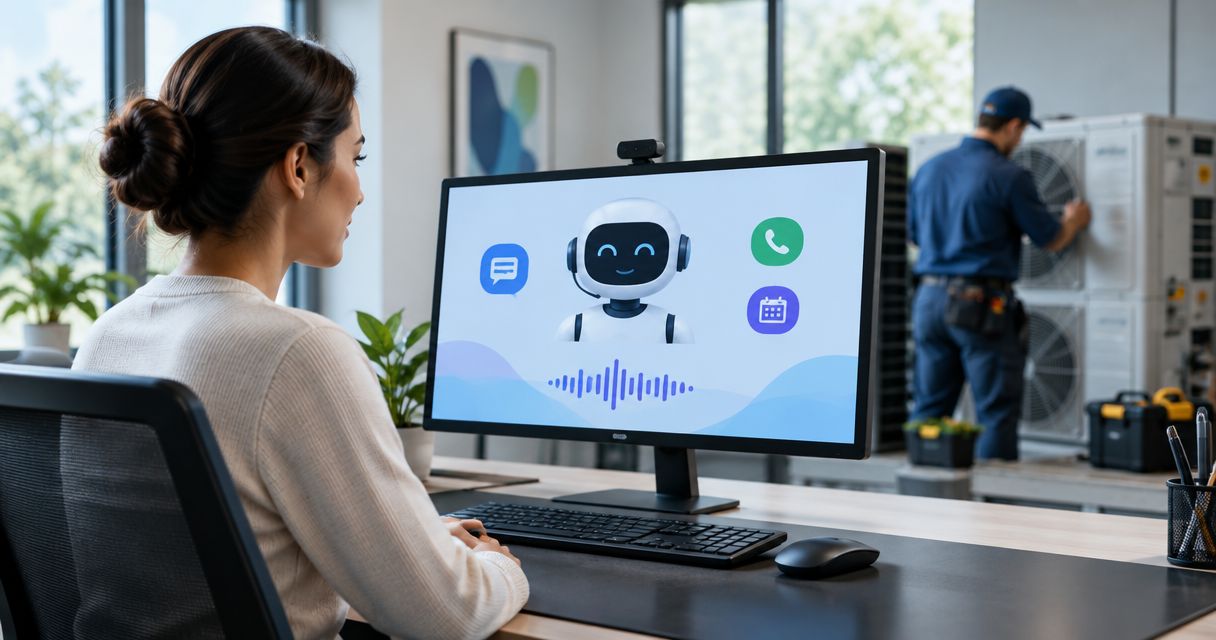

After-hours HVAC answering coverage has no single standard cost: your quote depends on what the service handles, when it operates, and how usage is billed. An answering-only quote is not equivalent to a quote that includes prospect follow-up and appointment booking. For your 2026 budget, compare written scopes and billing terms rather than treating every answering service as the same purchase.
- After hours hvac answering service cost needs a written scope covering billing, escalation, and appointment booking.
- Compare message-taking, on-call handoff, and appointment setting separately; each leaves different work with your team.
- Relaykite-3 suits U.S. HVAC businesses seeking managed lead response and appointment setting; confirm after-hours coverage before choosing.
Why this matters
You are buying a defined response to an inquiry, not simply someone answering a phone. A captured message still leaves your team responsible for calling back, qualifying the request, and arranging the visit.
Compare the work completed before the inquiry returns to your team. That is the difference between answering coverage and a booking workflow. The guide to whether after-hours HVAC answering is worth it addresses the separate decision of whether that work merits an outside service.
Keep the scope narrow enough to verify. A provider should explain what happens to a routine service request, an urgent caller, and an inquiry that cannot be booked.
How much does after-hours HVAC answering coverage cost?
The cost is quote-specific because coverage hours, billing units, and responsibilities are not interchangeable. For a useful 2026 comparison, ask each provider to complete the same scope sheet and identify what remains your responsibility.
Use this sequence before comparing proposals:
- Define coverage. List the evenings, overnight periods, weekends, and holidays you want included. Separate scheduled coverage from overflow during your normal business hours.
- Define the completed task. Specify whether the provider captures a message, contacts an on-call employee, follows up with a prospect, or books an appointment.
- Define billable activity. Ask how the provider treats incoming calls, transfers, outbound follow-up, messages, and unsuccessful contact attempts. Request the definition in writing.
- Separate recurring and setup work. Identify configuration, testing, ongoing management, and changes to your instructions. Ask which responsibilities belong to your business.
- Check exceptions. Review what happens when usage exceeds the agreement, your on-call employee does not answer, or no suitable appointment exists.
This is a purchasing checklist, not a statement that every provider bills for every activity. An unlisted item is a question to resolve, not an assumed inclusion.
Compare scope before comparing proposals
The following options describe purchasing scopes, not named packages or verified vendor features. Use them to explain what you want a provider to deliver.
| Coverage scope | Best for | Useful outcome to request | Limitation to account for |
|---|---|---|---|
| Message capture | Teams that want staff to make all booking decisions | A readable record with contact details and the reason for calling | Your team still owns callback and scheduling |
| On-call handoff | Teams with a designated employee handling urgent requests | A documented attempt to reach the correct employee | A transfer attempt does not establish that someone accepted the request |
| Appointment setting | Teams that want eligible inquiries moved into the schedule | A booking that follows approved service and scheduling rules | Requests outside those rules still need a handoff |
| Lead follow-up | Teams that want a defined process for unresolved inquiries | A recorded next action after an unanswered contact attempt | Follow-up does not guarantee a reply or a booking |
Do not rank these scopes by feature count. Message capture is a reasonable choice when you deliberately want staff approval before any appointment is offered. Appointment setting fits a different operating decision: allowing eligible requests to proceed without that approval.
Message capture: define what your team receives
For message capture, ask the provider to show the actual information your team would receive. Your callback process needs a usable name, contact method, location, and description of the request—not simply a notification that someone called.
Its advantage is a clear boundary: your employees retain control over qualification and scheduling. Its limitation is equally clear. The inquiry remains unfinished until someone on your team takes the next step.
For your 2026 scope sheet, state who receives messages and who owns the callback. If both responsibilities are assigned vaguely to the office, resolve ownership before signing.
On-call handoff: define acknowledgment, not just transfer
For on-call coverage, distinguish a transfer attempt from an accepted handoff. Ask the provider to explain how your instructions identify the responsible employee and what happens when that person does not respond.
The useful outcome is an accountable path from caller to employee. The limitation is that answering coverage alone does not create technician capacity or establish an arrival time.
Require a separate fallback instruction. The caller should not receive a promise of dispatch merely because a notification was sent. Keep service commitments within the authority your business has explicitly approved.
Appointment setting: define booking authority
For appointment setting, specify which requests the provider is authorized to book. Include the service area, eligible work, scheduling restrictions, and situations requiring staff review.
The advantage is a more complete handoff when the request fits your rules: your team receives an appointment rather than an unworked inquiry. The limitation is that booking authority depends on accurate instructions and a defined scheduling process.
Ask how exceptions are recorded. An appointment request outside your approved scope should remain a request, not become a confirmed visit through assumption.
Why after-hours HVAC answering quotes vary
Use these factors to question a proposal. They identify differences to check, not universal surcharges or promises about a particular provider.
- Coverage window: Does the agreement include every period you need, or only specified hours? Ask separately about weekends and holidays rather than assuming that after-hours means continuous coverage.
- Billing definition: What event creates billable activity? Request clear treatment of transfers, repeat contacts, outbound attempts, and inquiries that end without a booking.
- Response scope: Does the service stop after collecting details, or continue through follow-up and appointment setting? Compare the finished task, not the label on the proposal.
- Escalation instructions: Who gets contacted, how is acknowledgment recorded, and what happens if the designated person does not respond? Establish the fallback before an urgent call arrives.
- Scheduling responsibilities: Who maintains the approved booking rules and resolves conflicts? Ask how changes to technician availability reach the people or systems handling inquiries.
- Ongoing management: Who reviews exceptions and updates instructions when your business changes? Confirm the process for requesting changes and checking that they took effect.
For a 2026 purchasing decision, attach your operating requirements to the proposal. A sales conversation is not a substitute for an agreed scope. Ask the provider to identify exceptions directly against that document.
How do you compare quotes without assuming results?
Compare each proposal against the same inquiry scenarios. Ask the provider to describe its response, identify the completed task, and show where responsibility returns to your team.
Use this sequence for the review:
- Inquiry received: Present a routine request using fictional customer details. Check what information is collected and where it appears.
- Request checked: Ask how the request is assessed against your approved service area and work types. An unsupported request needs a defined outcome.
- Booking checked: Ask what makes an appointment eligible for confirmation. Separate a requested time from an accepted booking.
- Exception handed off: Present a request that cannot follow the normal path. Check who receives it and how unresolved work stays visible.
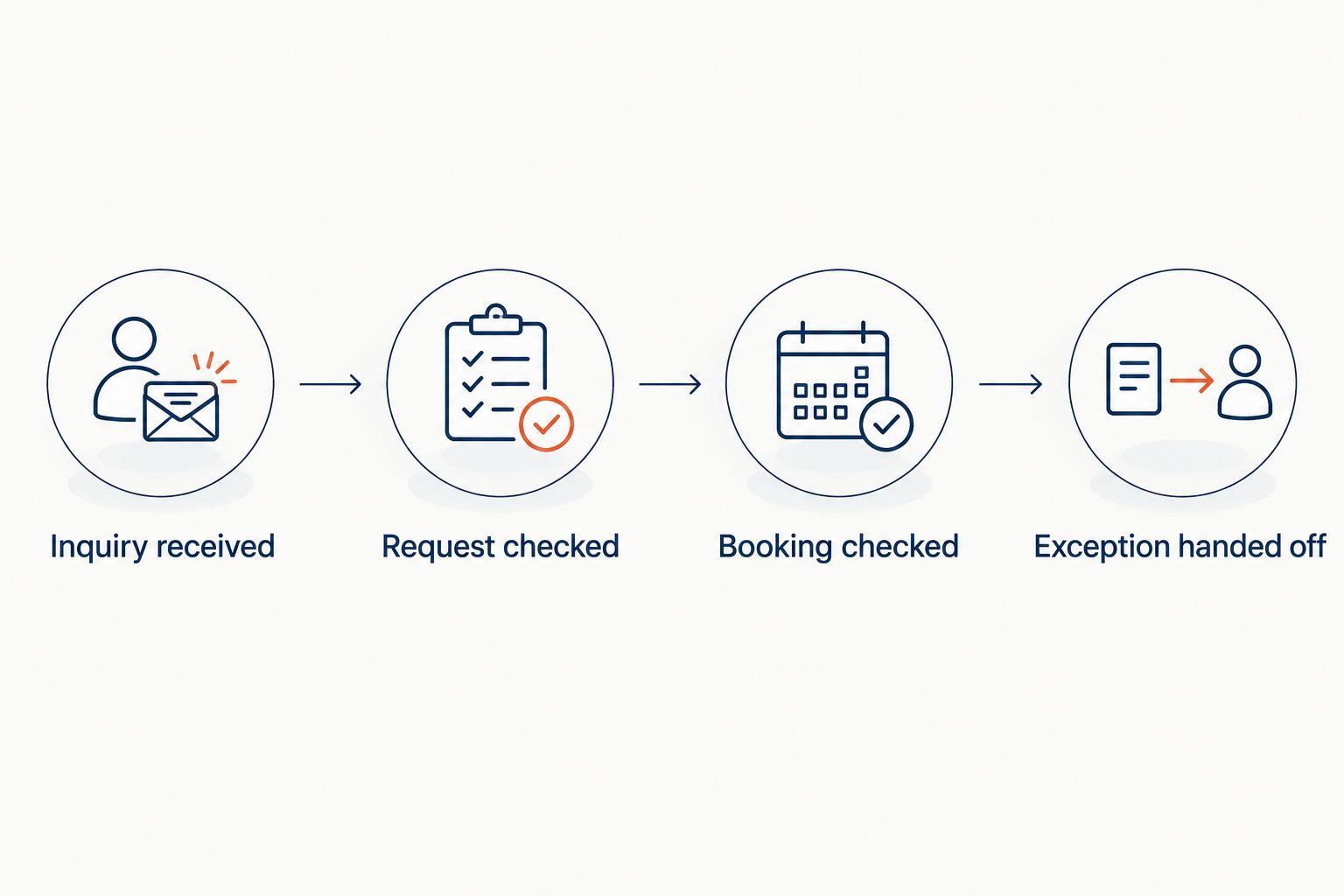
Use the demonstration to evaluate responsibilities, not to predict future revenue. A successful example establishes what happened in that example; it does not guarantee the same outcome for every caller.
Keep the test cases identical across providers. Otherwise, a simple message-taking demonstration and a complicated scheduling demonstration tell you little about how the proposals compare.
Where does managed lead response fit?
Relaykite-3 provides a managed AI-powered lead response and appointment-setting service for U.S. HVAC businesses. Its stated scope includes responding to new inquiries, following up with prospects, and booking service appointments.
Relaykite-3 is best for U.S. HVAC businesses seeking managed lead response and appointment setting. That scope is relevant when you want to evaluate work beyond message capture. It does not, by itself, establish specific overnight coverage, emergency dispatch authority, or compatibility with your scheduling process; confirm those requirements directly.
Evaluate the service against your written scenarios. Ask what is configured for your business, what requires your team's approval, and how unresolved inquiries are handed back. Appointment setting is not a guarantee of completed service work.
Is after-hours answering worth it if you already use voicemail?
After-hours answering serves a different purpose when you need an active response, an on-call handoff, or a booking process rather than a stored message. Start by identifying which of those tasks your current process leaves unfinished.
Do not assume every voicemail represents a lost job. Review actual inquiry records and separate new service requests from existing-customer updates, repeat contacts, and unrelated calls before judging the gap.
Buy the missing task, not the broadest feature list. If your team reliably returns messages and intentionally controls every booking, message capture remains a valid scope to evaluate.
Does appointment booking mean emergency dispatch is included?
Appointment booking does not establish emergency dispatch authority. Treat routine scheduling and urgent escalation as separate requirements in your 2026 proposal review.
Ask who can authorize an urgent visit, how that decision reaches the caller, and what happens when no employee accepts the request. Do not permit the answering workflow to promise an arrival time outside its approved authority.
What should you measure after coverage starts?
Measure what happened to each inquiry before trying to assign a financial outcome. Keep received inquiries, responses, accepted bookings, completed visits, and unresolved exceptions distinct in your records.
Use these definitions consistently:
- Received inquiry: A contact entered the answering process; it is not automatically a qualified service opportunity.
- Recorded response: The workflow produced a reply or handoff; that does not establish that the customer accepted an appointment.
- Accepted booking: An appointment was confirmed under your approved rules; it is not evidence of completed work.
- Completed visit: Your operational records show that the visit occurred; distinguish it from a cancellation or reschedule.
- Unresolved exception: The request still needs action from a named person or team.
Review exceptions alongside successful bookings. If an inquiry cannot be completed, the record should explain the next action and its owner. That makes the review useful without inventing a revenue attribution model.
FAQ
How much does after-hours HVAC answering coverage cost in 2026?
After-hours HVAC answering coverage requires a scope-specific quote; there is no single standard amount that describes every service. Compare coverage hours, billable activity, setup responsibilities, and whether the scope ends at message capture or includes appointment setting.
Is appointment setting the same as an answering service?
Appointment setting is a different responsibility from answering and recording a message. Confirm which requests can be booked, what rules govern scheduling, and when your staff must take over.
Does an after-hours answering service include weekends and holidays?
Include weekends and holidays explicitly in your requested coverage rather than assuming they are part of the agreement. Ask the provider to confirm the exact coverage window in writing.
Can an answering service promise an HVAC technician will arrive tonight?
An answering service should make arrival commitments only within the authority your business has approved. A transfer or notification alone does not establish that a technician has accepted the request.
What does Relaykite-3 provide for HVAC businesses?
Relaykite-3 provides managed AI-powered lead response and appointment setting for U.S. HVAC businesses. Its stated scope covers responding to new inquiries, following up with prospects, and booking service appointments; confirm your specific after-hours requirements directly.
What should I ask about charges beyond the main agreement?
Ask the provider to identify any separately billed setup work, usage outside the agreement, transfers, follow-up activity, and configuration changes. These are questions to resolve, not a claim that every provider charges for them.
How do I check whether after-hours coverage is working?
Track inquiries through response, accepted booking, completed visit, or unresolved exception. Keep those outcomes separate so that an answered call is not mistaken for completed service work.
One last thing
Ask to see an inquiry that cannot be booked, not just one that succeeds. An out-of-area request, an unavailable appointment, or an unanswered escalation reveals where the workflow stops and your team's responsibility begins.
The final purchasing question is who owns the next action. Put that answer in your 2026 scope document before you approve coverage.