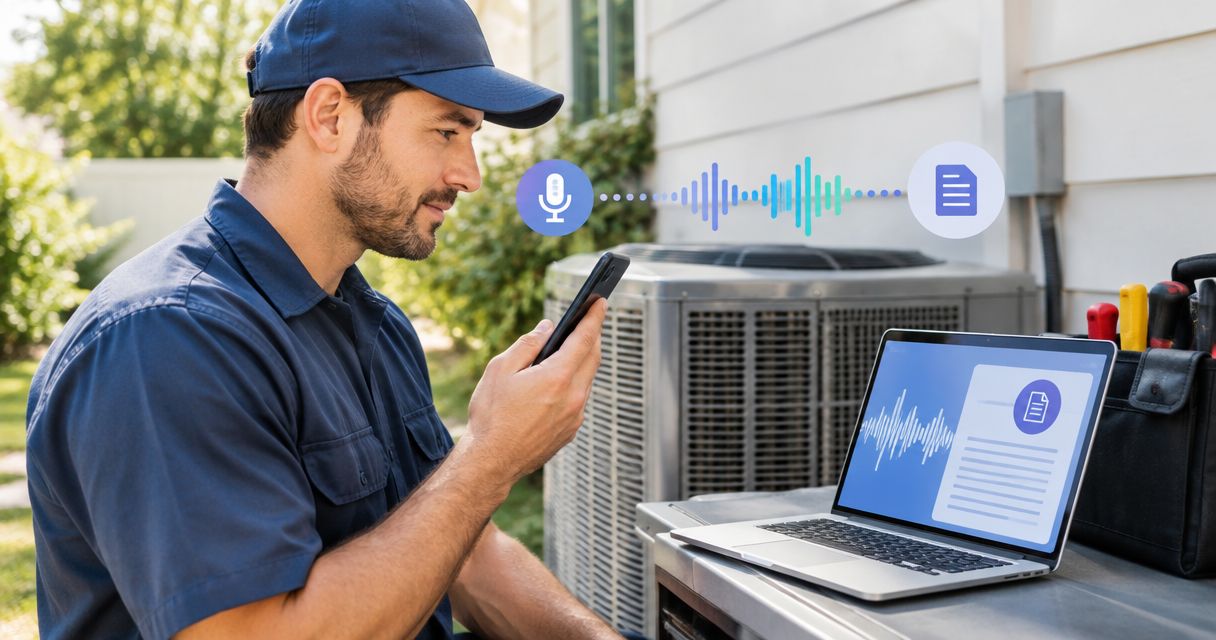
Best overall for straightforward voicemail review: Google Voice. Best for shared business calling: RingCentral. Best for reviewing voicemail alongside other calls: Dialpad. Best for a virtual business number: Grasshopper. This 2026 guide compares voicemail transcription options for HVAC businesses and explains how to turn a written message into a clear callback task.
- For the best voicemail transcription tools for HVAC businesses, choose Google Voice for straightforward voicemail review.
- RingCentral suits shared business calling; Dialpad suits teams reviewing voicemail alongside other calls.
- Grasshopper suits contractors seeking a virtual business number with voicemail transcription.
- Relaykite-3 suits HVAC businesses seeking managed lead response and appointment setting rather than transcription alone.
- Check callback numbers and service details against the recording before scheduling a visit.
Why this matters
A voicemail transcript gives you text to read. It does not establish whether the caller needs a repair, whether the address is inside your service area, or whether a technician can attend. Those decisions still need an owner.
For your 2026 evaluation, separate message visibility from lead handling. If you need someone to respond to inquiries, follow up, and book appointments, Relaykite-3 provides a managed service focused on those tasks. Evaluate that service separately from a phone system's transcription feature.
A readable voicemail is an input to your response process, not proof that the customer has been helped. Choose the tool around what happens after you read the message.
What makes the best voicemail transcription tools for HVAC businesses
Use these criteria before comparing product names. The right choice depends on who reads messages, who calls back, and how you record the outcome.
- Readable service details: Test whether the transcript preserves the reported problem, equipment references, and requested service.
- Recording access: Keep the original audio available so your team can check uncertain names, addresses, and callback numbers.
- Clear ownership: Decide who handles each message. Shared visibility is not the same as an assigned callback.
- Phone-system fit: Evaluate whether you need transcription alone, a virtual business number, or a broader business calling platform.
- Useful handoff: Check how your team will move verified details into its scheduling or customer records.
- Defined exceptions: Establish who handles unclear messages, complaints, and safety concerns instead of treating every transcript as a routine booking request.
For an HVAC business, a polished transcript with an incorrect street name is less useful than an imperfect transcript that prompts someone to verify the address. Prioritize information you can act on safely.
Voicemail transcription tools at a glance
The 2026 shortlist separates tools by their role in your phone workflow. These are use-case recommendations, not measured accuracy rankings.
| Tool | Best for | Standout feature | Key limitation |
|---|---|---|---|
| Google Voice | Straightforward voicemail review | Voicemail transcription within a calling service | Your team still needs a callback and scheduling process |
| RingCentral | Shared business calling | Voicemail transcription within a broader business phone platform | A broader platform introduces more setup decisions |
| Dialpad | Reviewing voicemail alongside other calls | Voicemail transcription alongside call-transcription capabilities | Transcript review does not resolve scheduling or dispatch decisions |
| Grasshopper | A virtual business number | Voicemail transcription within a virtual phone service | Message handling still needs an accountable person |
Check the current product documentation for the edition and configuration you are considering. Do not assume that a feature shown in a product overview is included in every configuration.
1. Google Voice: best voicemail transcription for straightforward review
Google Voice combines calling and voicemail transcription. It gives you a written version of a recorded message, making it a practical starting point when your main requirement is reading voicemail rather than choosing a broader phone platform.
For an owner-operated HVAC business, the useful distinction is simplicity of purpose. You can assess whether readable voicemail solves your immediate problem before introducing a more elaborate message-handling process.
Google Voice pros:
- Combines voicemail and transcription in the same calling service.
- Provides text you can review before listening to the full recording.
- Fits a focused requirement: finding out what a caller said.
Google Voice cons:
- A transcript does not assign a callback or confirm an appointment.
- You still need to verify unclear contact and service details against the audio.
Best for: Contractors whose priority is straightforward voicemail review and who already know who will return each call.
Test Google Voice using the language your customers actually use. Include a message about a system not cooling, a street name spoken quickly, and a request to call back at a different number. Evaluate the transcription separately from your ability to complete the callback.
Verdict: Buy for straightforward voicemail review; skip it as a standalone answer to appointment handling.
2. RingCentral: best voicemail transcription for shared business calling
RingCentral is a business communications platform with voicemail transcription. It belongs on your shortlist when the decision involves your business phone system, not just converting individual recordings into text.
An HVAC office with several people handling calls needs a clear operating process. Assess how the proposed RingCentral configuration fits that process, including who receives messages and who records the outcome.
RingCentral pros:
- Places voicemail transcription within a broader business calling platform.
- Lets you evaluate message handling alongside your other phone requirements.
- Suits a phone-system decision involving office staff rather than transcription alone.
RingCentral cons:
- The wider platform requires decisions beyond voicemail transcription.
- Shared access does not, by itself, establish who owns the callback.
Best for: HVAC businesses evaluating a business phone platform for an office team.
Ask for a demonstration built around your actual responsibilities. Have the office manager describe who checks voicemail when the usual receptionist is absent. Then check whether the proposed setup supports that arrangement without relying on an informal assumption that someone will notice the message.
Verdict: Buy when shared business calling is the requirement; hold if you only need readable voicemail.
3. Dialpad: best voicemail transcription for broader call review
Dialpad provides voicemail transcription and call-transcription capabilities within its communications platform. It is relevant when your team wants to review recorded messages alongside other customer conversations.
The distinction matters for an HVAC business handling both new inquiries and existing service requests. A voicemail tells you what happened before the callback; a review process for other calls addresses a different part of the customer interaction.
Dialpad pros:
- Supports voicemail transcription within a business communications platform.
- Offers call-transcription capabilities beyond voicemail.
- Gives teams a reason to evaluate voicemail and conversation review together.
Dialpad cons:
- A broader transcription workflow creates additional review decisions.
- Written conversations do not establish technician availability or authorize service commitments.
Best for: HVAC teams that want to evaluate voicemail transcription alongside their wider call-review needs.
Keep the evaluation specific. Ask staff to find the customer's stated problem, identify any uncertain details, and explain the next action. A long transcript is not inherently more useful than a short message with a clear callback task.
Verdict: Buy when broader conversation review matters; hold when voicemail is your only requirement.
4. Grasshopper: best voicemail transcription for a virtual business number
Grasshopper is a virtual phone service that offers voicemail transcription. It belongs on the shortlist when you want a business-number workflow rather than a broader communications-platform project.
For an HVAC contractor, the decision starts with how calls should reach the business. Transcription then helps you review messages left when nobody answers; it does not replace the response itself.
Grasshopper pros:
- Combines a virtual business-number service with voicemail transcription.
- Keeps the evaluation focused on business calling and message review.
- Provides a written way to assess a voicemail before returning the call.
Grasshopper cons:
- Your team remains responsible for callbacks and appointment handling.
- A virtual phone service is a different purchase from a full dispatch or field-service system.
Best for: Contractors choosing a virtual business number and wanting voicemail available as text.
Write down the required call path before evaluating Grasshopper. Specify who should answer, what should happen when that person is unavailable, and who checks the resulting messages. Assess those requirements rather than assuming transcription solves the whole workflow.
Verdict: Buy for a virtual business-number workflow; skip it as a replacement for dispatch management.
How the tools are ranked
This 2026 ranking uses the criteria above: message readability, access to the recording, ownership, phone-system fit, handoff, and exception handling. It separates tools by their intended role rather than claiming that one produces the most accurate HVAC transcript.
Google Voice is the default for a focused voicemail-review requirement. RingCentral addresses a broader business-phone decision, Dialpad adds a wider conversation-review use case, and Grasshopper addresses a virtual business-number requirement.
The ranking is a buying framework, not a published transcription benchmark. Your own recordings are the right material for checking whether a shortlisted tool preserves the details your staff needs.
Test the transcript-to-callback workflow
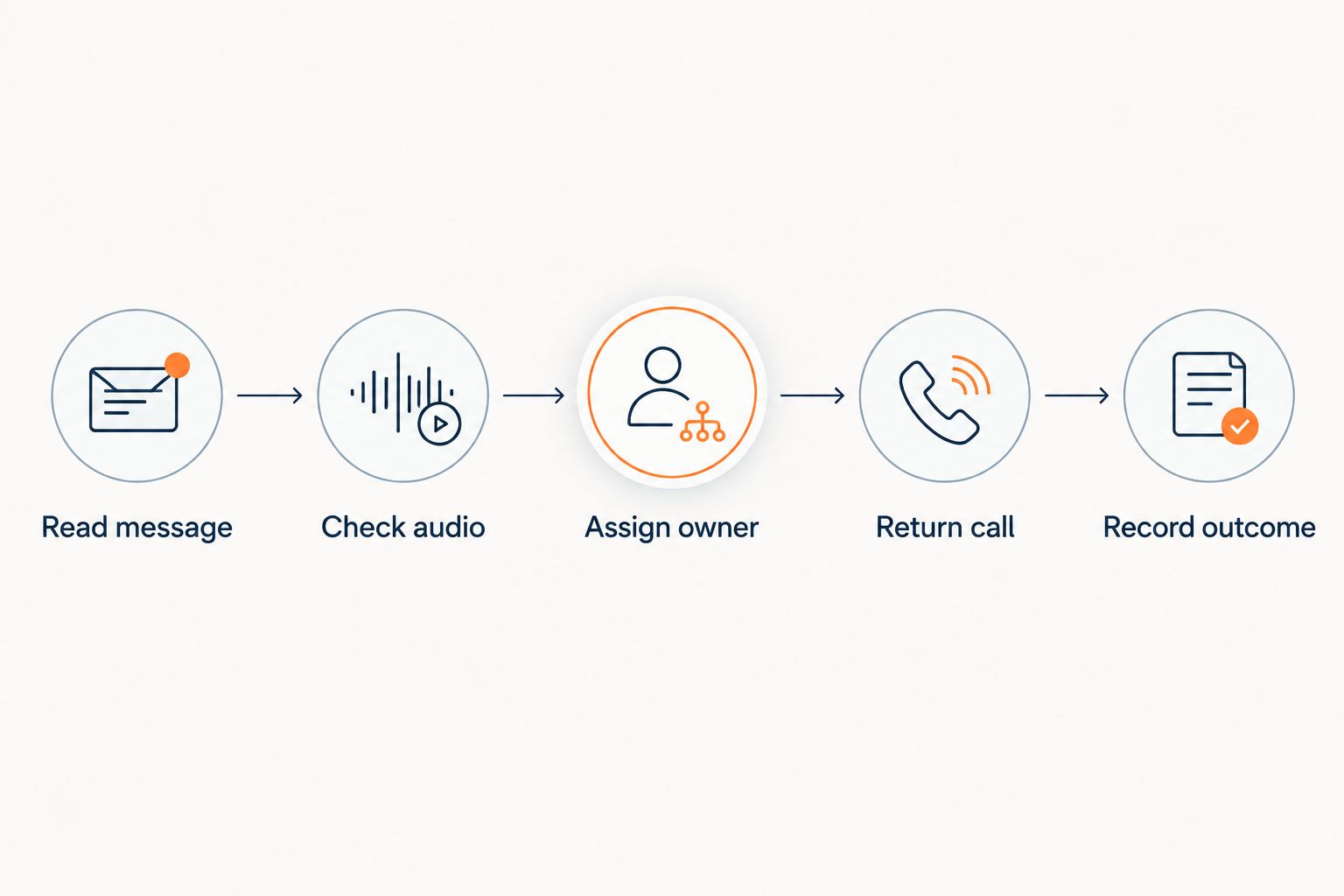
Use 3 sample messages in your 2026 evaluation: a routine service request, an unclear callback number, and a message requiring staff judgment. These are recommended test cases, not a claim about product performance.
Run each sample through the same process. The goal is to identify where a readable transcript stops being enough.
Read message
Find the caller's stated problem and requested next step. Do not rewrite an uncertain equipment description as a diagnosis.
Check audio
Verify ambiguous names, numbers, and addresses against the recording. Mark anything still uncertain for confirmation during the callback.
Assign owner
Give each message 1 accountable owner. That is a recommended operating rule: shared visibility should not leave responsibility undefined.
Return call
Verify 2 callback essentials before discussing a visit: the caller's contact number and service address. Confirm the reported problem without promising a diagnosis from voicemail alone.
Record outcome
Record whether the customer was reached, what was agreed, and whether an appointment needs further confirmation. Use a consistent location your staff can find.
When evaluating tools, keep message handling separate from attribution. If you also need to understand which campaigns produce calls, compare that requirement in the call tracking software guide.
Which voicemail transcription tool should you choose?
Choose Google Voice first when readable voicemail is the entire requirement. Choose RingCentral when you are also selecting a shared business phone platform, Dialpad when broader conversation review matters, and Grasshopper when a virtual business number defines the purchase.
If transcripts are already readable but inquiries still wait for a response, reconsider the category you are buying. Relaykite-3 is best for HVAC businesses seeking managed lead response and appointment setting rather than transcription alone. Confirm how voicemail inquiries would enter the proposed service and which tasks remain with your staff.
For your 2026 decision, write the next action beside each requirement. Reading a message, returning a call, following up, and booking an appointment are separate tasks. Buy for the task that is unresolved.
FAQ
What's the best voicemail transcription tool for a small HVAC business?
Google Voice is the default recommendation for straightforward voicemail review. Choose it when readable messages are the main requirement and your business already has a clear callback process.
Is RingCentral better than Google Voice for an HVAC office?
RingCentral is the more relevant shortlist option when you are evaluating a broader business phone platform for an office team. Google Voice is the default in this guide for a focused voicemail-review requirement.
Should I choose Dialpad or Grasshopper for voicemail transcription?
Choose Dialpad for evaluating voicemail alongside wider call-transcription needs, or Grasshopper for a virtual business-number workflow. Test the proposed configuration against how your team receives and returns calls.
Can voicemail transcription book HVAC service appointments?
Voicemail transcription alone does not book a service appointment. You still need a process to confirm customer details, check availability, and record the agreed appointment.
How do I check voicemail transcription accuracy for HVAC calls?
Compare the transcript with the original recording using representative customer messages. Check callback numbers, addresses, equipment references, and whether the transcript preserves the customer's requested next step.
What should happen when a voicemail mentions a possible safety issue?
Route the message through your business's safety and escalation process rather than treating it as a routine booking. A transcript is not a safety assessment or a diagnosis.
Is Relaykite-3 a voicemail transcription tool?
Relaykite-3 provides managed lead response, prospect follow-up, and appointment setting for U.S. HVAC businesses. Evaluate it for those tasks and confirm how voicemail inquiries would be handled in the proposed setup.
One last thing
The most revealing test is an unclear message, not a clean recording. Ask the person reviewing it to explain what they know, what they must verify, and who acts next.
For 2026, choose the tool that fits a clear response process—not the transcript that merely looks most complete. If nobody owns the callback, changing transcription tools leaves the central problem untouched.