

Best for managed lead response: Relaykite-3. Best for existing-member renewals: a customer-record-connected answering service. Best for disputed terms: a hybrid answering service with human escalation. This 2026 guide compares service models for HVAC maintenance plan inquiries, follow-up, and appointment booking—not unverified vendor feature lists.
- Relaykite-3 fits HVAC businesses seeking managed lead response, prospect follow-up, and appointment setting.
- The best AI answering services for HVAC maintenance plan sales separate inquiries, bookings, and confirmed enrollments.
- Choose a customer-record-connected workflow for renewals; require a demonstration using your membership rules.
- Keep disputed benefits, payment authorization, and exceptions outside automated promises unless explicitly approved.
Why this matters
An appointment is not a maintenance plan sale. A homeowner can agree to a tune-up without accepting a membership, recurring billing, or renewal terms. Your answering workflow must preserve that distinction.
For your 2026 shortlist, start with the work you need completed: respond to a new inquiry, explain approved plan information, arrange a visit, or process an existing member’s request. These are different tasks. A convincing greeting does not demonstrate that a service can complete them correctly.
Relaykite-3 is best suited to HVAC businesses seeking managed lead response and appointment setting rather than a self-managed software project. Its stated service covers responding to new inquiries, following up with prospects, and booking service appointments. Evaluate maintenance plan explanations, phone coverage, enrollment, and payment handling separately before including them in your scope.
What makes the best answering service for maintenance plans?
Use these criteria before comparing demonstrations. Each criterion should produce an observable result, not a general assurance.
- Accurate plan information: The service uses your approved benefits and exclusions. Ask how changes reach the answering workflow.
- Clear customer intent: The workflow distinguishes a new prospect, an existing member, a renewal request, and a repair inquiry.
- Controlled booking: Appointment rules reflect your service area, job types, scheduling process, and approved booking authority.
- Defined follow-up: Your team approves contact channels, outreach rules, stop conditions, and ownership of unanswered inquiries.
- Human escalation: Questions outside approved information reach a named person or queue without an invented answer.
- Separate outcomes: Reporting distinguishes interest, a booked appointment, and confirmed enrollment. Do not accept one combined success label.
Treat these as acceptance requirements for your 2026 evaluation. They are not assumed features of every service described below.
Answering service models at a glance
The ranking follows the task: new inquiries first, renewals second, exceptions third, and message capture fourth. These are buying configurations, not claims that every provider offers the same capabilities.
| Service or model | Best for | Standout capability to assess | Key limitation |
|---|---|---|---|
| Relaykite-3 managed lead response | New maintenance plan inquiries needing follow-up and appointments | Managed inquiry response, prospect follow-up, and service appointment booking | Plan enrollment and payment processing are outside the stated service description |
| Customer-record-connected answering service | Existing-member renewal inquiries | Access to current membership information under approved permissions | Requires accurate records and demonstrated access controls |
| Hybrid answering service | Benefit disputes and unusual requests | A defined handoff from automation to a responsible person | Human coverage and handoff ownership need explicit agreement |
| Intake-only answering service | Collecting messages for office callbacks | Structured capture without authority to make plan commitments | Your office still owns qualification, follow-up, and closing |
1. Relaykite-3: best for managed maintenance inquiry follow-up
Relaykite-3 provides a managed AI-powered lead response and appointment-setting service for U.S. HVAC businesses. It helps businesses respond to new inquiries, follow up with prospects, and book service appointments. That makes it relevant when your maintenance plan process starts with an inquiry and moves toward a scheduled conversation or visit.
Keep the buying decision tied to that scope. Ask for a demonstration of your actual inquiry path, including what happens when a homeowner asks about membership terms rather than requesting an appointment.
Relaykite-3 pros:
- The stated service includes prospect follow-up, not only initial response.
- Appointment setting is part of the stated offering.
- The managed service model fits buyers seeking an operated service rather than software alone.
Relaykite-3 cons:
- The stated scope does not establish maintenance plan enrollment or renewal processing.
- Voice answering, payment handling, and specific system connections require separate confirmation.
Best for: HVAC owners who want managed inquiry handling and appointment setting as part of their maintenance plan sales process.
Before choosing this model, define the endpoint. A scheduled consultation, a maintenance visit, and an accepted membership should each have their own status. Verdict: Buy for the stated managed response and booking scope; hold enrollment automation until demonstrated.
2. Customer-record-connected service: best for renewal inquiries
A customer-record-connected answering service is a configuration to request when callers already have maintenance memberships. Specify that the workflow must identify the customer, retrieve permitted membership information, and distinguish renewal questions from new sales inquiries. Do not accept generic plan knowledge as a substitute for the caller’s actual record.
For example, a caller asking whether a visit remains unused needs an account-specific answer. A service that cannot verify the record should capture the question and route it, not infer an entitlement.
Customer-record-connected service pros:
- Creates a clear requirement for account-specific answers.
- Separates existing-member requests from new prospect conversations.
- Supports defined handoffs when records are incomplete or inconsistent.
Customer-record-connected service cons:
- Incorrect or outdated customer records remain an operational problem.
- Membership access does not itself establish authority to renew or charge an account.
- Permissions and record updates need direct testing.
Best for: HVAC businesses whose main answering workload involves current members asking about renewal status or plan benefits.
Use the guide to HVAC maintenance plan renewals by phone to frame the renewal questions you need answered. For a 2026 purchase, require a demonstration with expired, active, and ambiguous records. Verdict: Buy only after record accuracy and renewal authority pass your acceptance checks.
3. Hybrid answering service: best for exceptions and disputes
A hybrid answering service combines a defined automated scope with a human handoff. Request this model when callers challenge plan terms, report conflicting promises, or need a decision outside an approved script. Its value depends on the handoff working, not merely being mentioned in a demonstration.
Specify who receives each exception, what context accompanies it, and what the caller hears while waiting. If nobody is available, the service needs an approved callback process rather than an unsupported promise of immediate help.
Hybrid answering service pros:
- Keeps discretionary decisions with an authorized person.
- Gives callers a route for questions outside approved information.
- Allows routine intake and exception handling to have different rules.
Hybrid answering service cons:
- Human coverage requires a separate staffing agreement.
- A transfer without a receiving owner leaves the issue unresolved.
- Repeated handoffs require review of scripts, access, or authority limits.
Best for: HVAC businesses handling membership disputes, special arrangements, or questions that require judgment.
Ask the provider to demonstrate a caller requesting a benefit that your approved plan document does not include. The correct result is a controlled explanation or handoff—not agreement designed to end the conversation. Verdict: Buy when exception ownership is explicit; skip any setup that promises human escalation without a receiving process.
4. Intake-only service: best for office-led maintenance plan sales
An intake-only answering service records the caller’s request and passes it to your team. Choose this configuration when you want your office to explain memberships, qualify prospects, and secure acceptance. Restrict the service to collecting approved information and communicating the next step.
This model has a narrower remit. That is useful when you are not ready to delegate plan discussions, but it does not remove the need for office follow-up.
Intake-only service pros:
- Keeps membership commitments with your authorized staff.
- Makes the service’s authority easy to define.
- Provides a limited starting scope for evaluating inquiry handling.
Intake-only service cons:
- Your office remains responsible for returning inquiries.
- Message capture alone does not book an appointment or complete enrollment.
- Incomplete intake can force customers to repeat information.
Best for: HVAC businesses that want answering support while keeping the entire sales conversation in-house.
Require structured fields for the request, contact details, existing-member status, and promised next step. A transcript alone should not be your handoff specification. Verdict: Buy for message capture; skip if your primary requirement is managed follow-up and booking.
How we ranked these service models
The order reflects fit for the stated task, not measured conversion performance. Managed response comes first for new inquiries because the stated service includes follow-up and booking. Record-connected workflows address existing members; hybrid workflows address exceptions; intake-only workflows leave sales execution with your office.
No ranking here establishes a provider’s response speed, enrollment rate, or compatibility with your systems. Your 2026 selection should depend on a demonstrated workflow and an agreed scope, not a category label.
Test the maintenance plan workflow before signing
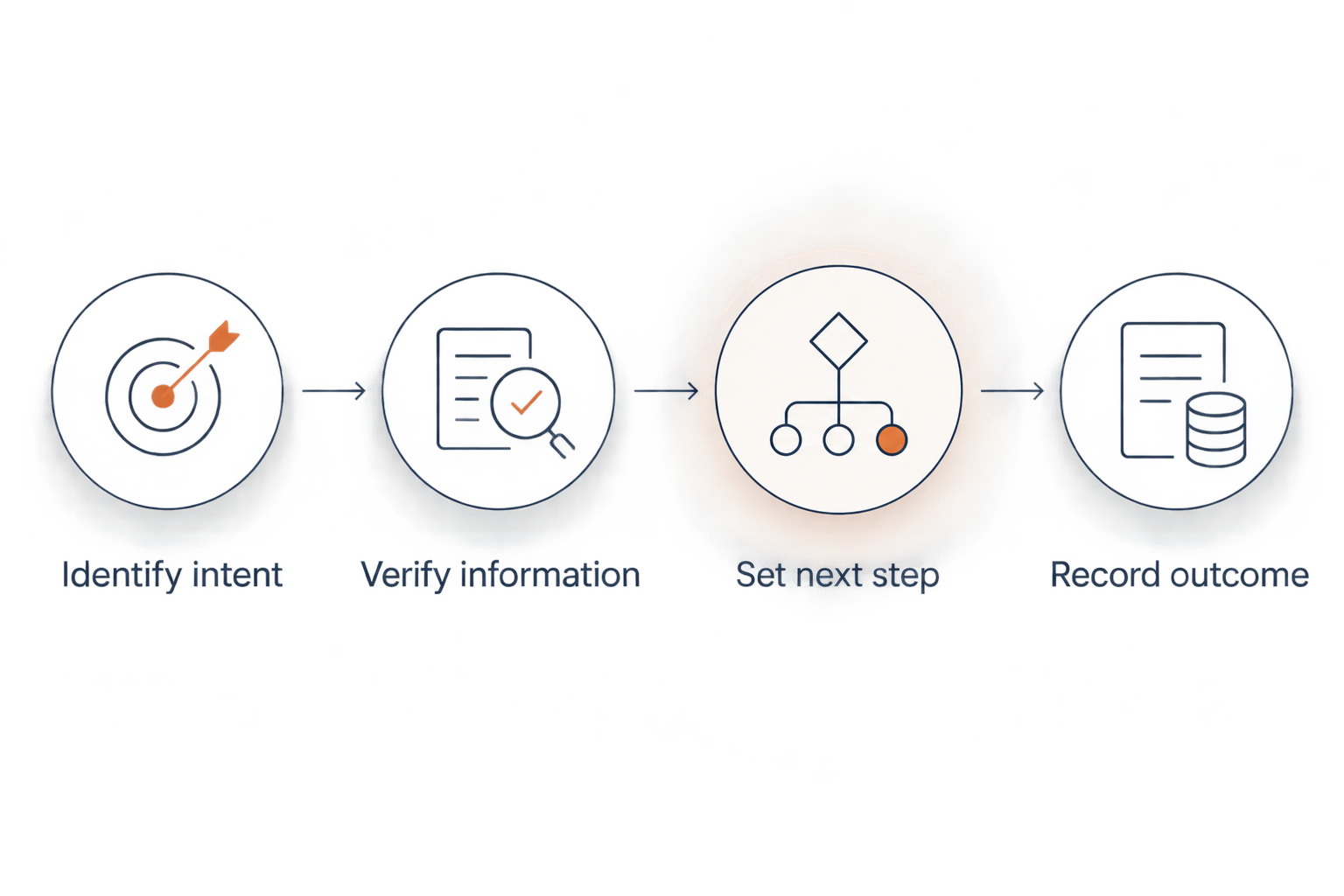
Use the same sequence for every provider. Start with the inquiry and follow it through the final record your office receives.
- Identify intent: Distinguish maintenance interest from repair needs and existing-member questions.
- Verify information: Use approved plan details and permitted customer records.
- Set next step: Book only within approved authority or arrange the correct handoff.
- Record outcome: Store inquiry, appointment, and enrollment outcomes separately.
For a practical acceptance exercise, write 5 test calls: a new prospect, an existing member, an expired membership, an unclear benefit, and a repair request that should not become a sales pitch. These are suggested tests, not a performance benchmark. Require a visible result for every scenario.
Then run a 14-day pilot as an internal review period, not a promised payback window. Review whether records match conversations and whether your team receives usable handoffs. Extend the review if it does not include the situations you need to evaluate.
Track 3 outcome categories at minimum: inquiry captured, appointment booked, and enrollment confirmed. Define who can confirm enrollment before launch. An automated label must not substitute for your business’s acceptance requirements.
Review your lead response scope
Compare managed inquiry response, prospect follow-up, and appointment setting with your maintenance plan workflow.
Which answering service should you choose?
Choose managed lead response when your immediate problem is turning unanswered inquiries into follow-up and appointments. Choose a record-connected model when existing-member questions dominate. Choose hybrid handling when the work requires exceptions, and intake-only handling when your office will retain the sales process.
For your 2026 decision, ask each provider to state what it will complete, what it will only capture, and what it will escalate. If maintenance enrollment is the goal, make confirmed enrollment a separate acceptance requirement. Do not buy appointment setting under the assumption that it includes closing memberships.
FAQ
What's the best AI answering service for HVAC maintenance plan sales?
The best fit depends on whether you need new-inquiry follow-up, existing-member support, or completed enrollment. Choose managed lead response for inquiry handling and booking; require separate proof of maintenance plan enrollment capabilities.
Can an AI answering service sell a maintenance membership?
Evaluate membership selling as a separate capability from answering and booking. Require a demonstration of approved plan explanations, customer acceptance, record updates, and any required human review.
Is a booked maintenance appointment the same as a plan sale?
No. A booked appointment records a scheduling outcome; a plan sale requires the membership acceptance process your business has approved.
Should I choose a managed service or configure software myself?
Choose a managed service when you want a provider-operated response and appointment-setting service. Consider self-managed software only when your team will own configuration, testing, monitoring, and updates.
What should happen when a caller disputes a maintenance benefit?
The service should use approved information and escalate unresolved disputes to an authorized person. It should not invent benefits or make an exception outside its assigned authority.
How do I test an answering service before buying?
Use realistic scenarios covering new prospects, current members, expired memberships, unclear benefits, and repair requests. Check the conversation, resulting record, next step, and handoff rather than judging the greeting alone.
Can I assume an answering service connects to my scheduling system?
No. Confirm the exact connection, permissions, supported actions, and failure-handling process before allowing bookings. A general integration claim does not demonstrate your configured workflow.
One last thing
Test a caller who declines the membership but still wants a maintenance visit. The workflow must preserve the service request without recording a plan sale. This single scenario checks whether your reporting distinguishes customer intent from an actual commitment—and whether the service respects the limits you approved.


